Short Answer
Location
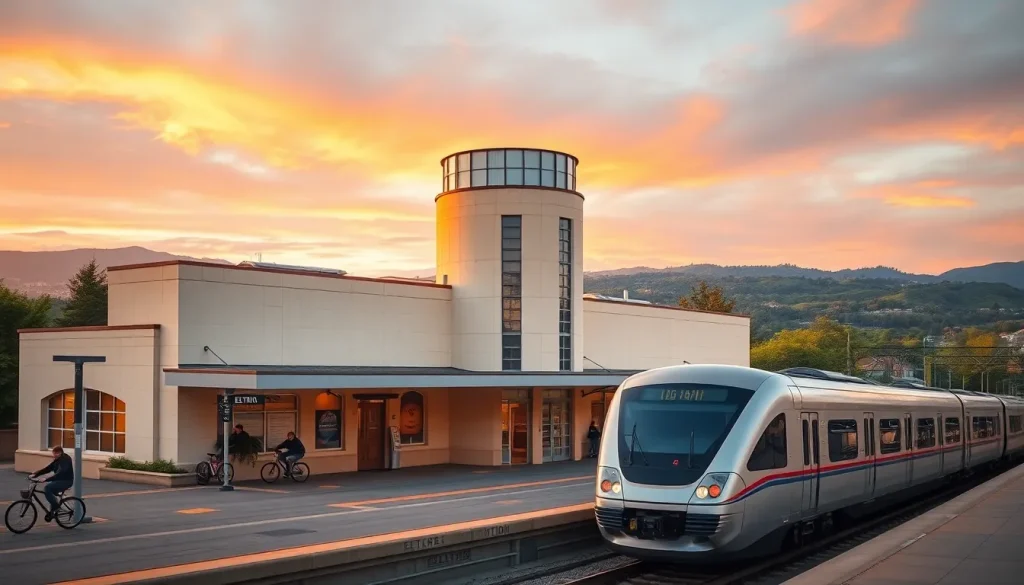
The Palo Alto Caltrain Station is situated at 95 University Avenue, at the intersection of Alma Street and University Avenue in downtown Palo Alto, California. It lies within the Peninsula Corridor, approximately 30 miles south of San Francisco and 15 miles north of San Jose. The station’s coordinates are 37.4436° N, 122.1647° W. It is strategically positioned adjacent to the historic commercial core of Palo Alto and serves as a primary transit gateway to Stanford University, located just one mile to the west via University Avenue. The station is flanked by Alma Street to the east and the railroad tracks to the west, with a pedestrian underpass connecting the two platforms. The surrounding area features a mix of early 20th-century architecture, modern office buildings, and the lush greenery characteristic of Palo Alto’s urban landscape.
Why It Is Significant
The Palo Alto Caltrain Station is far more than a transit stop; it is a tangible chronicle of the region’s transformation from a rural agricultural hub to the epicenter of global technology. Its significance rests on three pillars. First, it is an outstanding example of Streamline Moderne architecture, a style rarely applied to American railroad depots, designed by Southern Pacific architect John H. Christie in 1940. Second, the station has been the primary portal for generations of Stanford University students, faculty, and visitors since the university’s founding, cementing a deep historical bond between the railroad and the institution. Third, the depot embodies the evolution of Silicon Valley, witnessing the area’s shift from fruit orchards to high-tech campuses, and now serves as a critical node in the Caltrain commuter rail system, linking San Francisco to San Jose. Its listing on the National Register of Historic Places in 1996 underscores its architectural and historical importance.
Historical Timeline
| Year | Event |
|---|---|
| 1863 | The San Francisco and San Jose Railroad (SF&SJ) completes the first line through the area, but no station exists in Palo Alto yet. |
| 1894 | The first Palo Alto station, a two-story wooden depot, is built at University Avenue to serve the new Stanford University. |
| 1906 | The original station survives the great San Francisco earthquake with minor damage. |
| 1940 | The current Streamline Moderne station opens, replacing the 1894 depot. Designed by Southern Pacific architect John H. Christie. |
| 1971 | Amtrak takes over intercity passenger service; Southern Pacific continues commuter operations. |
| 1980 | Caltrain is formed, assuming control of the Peninsula commuter rail service. |
| 1996 | The station is listed on the National Register of Historic Places (NRHP) for its architectural significance. |
| 2004 | Major restoration project completed, including seismic retrofitting and interior modernization. |
| 2024 | Caltrain electrification project begins service, with new electric trains serving the station. |
Architectural or Natural Characteristics
The Palo Alto station is a distinguished example of Streamline Moderne design, a late Art Deco style characterized by aerodynamic curves, horizontal lines, and nautical elements. The building is a long, low-slung structure with a prominent rounded central entrance tower that evokes the bow of a ship. Its exterior is clad in smooth, cream-colored stucco with glass block windows and a flat roof with a slight cantilever over the waiting area. The central tower features a vertical fin sign with the station’s name, a classic Moderne motif. Inside, the waiting room retains original terrazzo floors, wooden benches, and a ticket counter with fluted detailing. The platform canopies are supported by streamlined concrete pillars. The station’s design reflects the optimism of the late 1930s, an era when railroads sought to project a modern, efficient image to compete with the automobile. The building’s scale and elegance also pay homage to the nearby Stanford University campus, with its Mission Revival and Romanesque architecture, creating a harmonious gateway to the university.
Cultural Meaning
The Palo Alto station is deeply woven into the cultural fabric of the community. For Stanford University, it has been the symbolic front door since the university’s founding, welcoming generations of students, professors, and dignitaries. The station’s presence influenced the development of University Avenue as Palo Alto’s main commercial artery. During World War II, the depot served as a transit point for soldiers and war workers. In the tech era, it became a backdrop for the daily migration of engineers and entrepreneurs, embodying the region’s shift from agriculture to innovation. The station has appeared in literature, film, and photography, often representing the intersection of tradition and progress. Its preservation is a testament to the community’s commitment to honoring its past while embracing the future.
Visiting Information
Hours of Operation
- Station Building: Open daily from approximately 5:30 AM to 11:30 PM, coinciding with train service. The waiting room is accessible during these hours.
- Ticket Office: Staffed Monday through Friday, 6:00 AM to 7:00 PM; closed weekends and holidays. Ticket vending machines are available 24/7 on the platforms.
- Train Service: Caltrain operates approximately 90 trains per weekday, with reduced service on weekends. Schedules are available on the Caltrain website.
Parking and Connections
- Parking: A paid parking lot with over 300 spaces is located adjacent to the station on Alma Street. Daily and monthly permits are available.
- Bicycle: Extensive bike racks and a BikeLink secure locker facility are provided. The station is a major hub for cyclists.
- Bus: SamTrans and VTA bus routes stop at or near the station. The free Stanford Marguerite Shuttle connects to the university campus.
- Rideshare: Designated pickup and drop-off zones are on Alma Street.
Accessibility
The station is fully accessible in compliance with the Americans with Disabilities Act (ADA). Both platforms are reachable via ramps and a pedestrian underpass with elevators. Tactile warning strips line the platform edges. Accessible parking spaces are available in the main lot. The waiting room and restrooms are wheelchair accessible. Caltrain provides level boarding on all new electric trains, eliminating the gap between the platform and train. Service animals are welcome. Passengers requiring assistance can contact Caltrain’s customer service in advance.
Preservation Status
The Palo Alto Caltrain Station was added to the National Register of Historic Places on April 18, 1996 (NRHP reference number 96000424). It is also listed on the California Register of Historical Resources. The station is owned by the Peninsula Corridor Joint Powers Board (Caltrain) and is maintained as an active transportation facility. A comprehensive restoration in 2004, funded by federal, state, and local sources, carefully preserved the building’s historic fabric while upgrading it for modern use. The project included seismic strengthening, restoration of the terrazzo floors and wooden benches, and installation of period-appropriate lighting. The station’s exterior remains remarkably intact, with only minor alterations. Ongoing preservation is guided by the Secretary of the Interior’s Standards for the Treatment of Historic Properties. The station is a key feature of Palo Alto’s historic preservation program and is often included in walking tours of the city’s architectural heritage.
Common Misconceptions
Map
FAQ
When was the current Palo Alto Caltrain station built?
The current Streamline Moderne station was built in 1940, replacing an earlier wooden depot from 1894.
Is the station listed on the National Register of Historic Places?
Yes, it was added to the National Register on April 18, 1996, for its architectural significance as a rare example of Streamline Moderne railroad architecture.
How do I get from the station to Stanford University?
Stanford University is about one mile west. You can walk along University Avenue, take the free Stanford Marguerite Shuttle (which stops at the station), or use a bike/scooter from the many available rentals.
What are the station's hours?
The station building is open daily from approximately 5:30 AM to 11:30 PM, matching train service. The ticket office is open weekdays 6:00 AM to 7:00 PM.
Does the station have parking?
Yes, there is a paid parking lot with over 300 spaces on Alma Street, along with extensive bicycle parking and lockers.



Leave a Reply