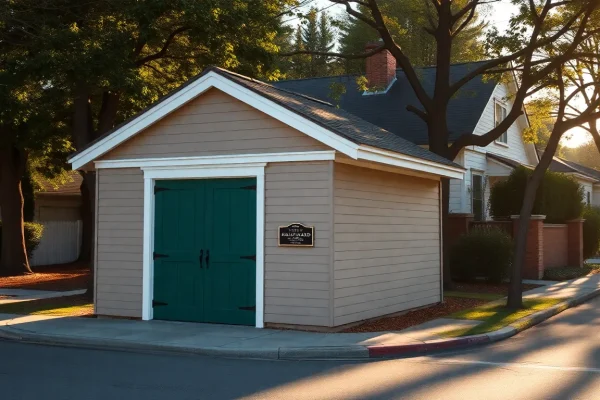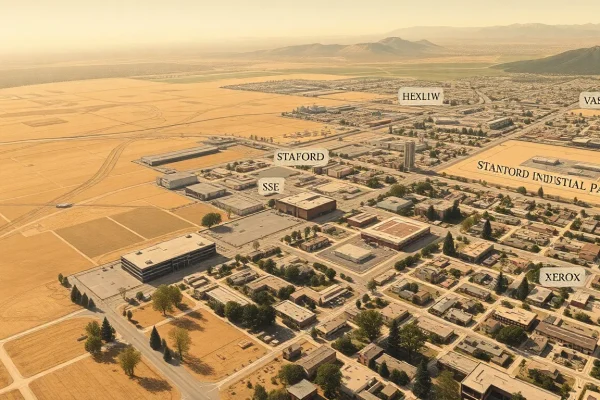
The Stanford Industrial Park: How a University’s Land Experiment Engineered Silicon Valley

In 1951, Stanford University leased a corner of its sprawling land holdings to a fledgling electronics firm, igniting a transformation that would turn the Santa Clara Valley from the ‘Valley of Heart’s Delight’ into the global epicenter of technology. The Stanford Industrial Park became the physical and symbolic heart of Silicon Valley, a carefully planned landscape where university research, venture capital, and corporate innovation fused into a new model of economic development. Its legacy is etched not only in the semiconductor chips and software that emerged from its low-slung buildings, but in the very pattern of suburban office parks, car-dependent commutes, and the displacement of agricultural communities that followed.
Read More →

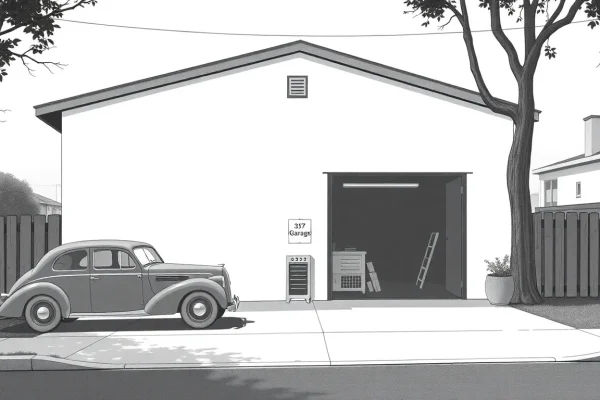
The Addison Avenue Garage: Unpacking the Origins of Hewlett-Packard in Palo Alto

In a one-car garage behind a modest Palo Alto rooming house, two recent Stanford graduates launched a partnership that would become the foundational myth of Silicon Valley. This article traces the precise chronology, geography, and contested narratives of Hewlett-Packard’s earliest days, from the first audio oscillator sold to Walt Disney Studios to the landmark preservation of the garage itself.

Read More →

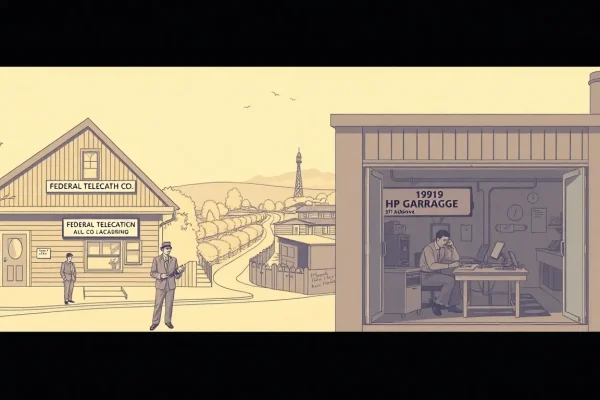
The Vacuum Tube and the Garage: Early Electronics Companies of Palo Alto, 1909–1960

Long before Silicon Valley became a global brand, a cluster of audacious electronics ventures took root in the orchards and boarding houses of Palo Alto. From Federal Telegraph’s pioneering radio transmissions in 1909 to Hewlett-Packard’s iconic garage and the semiconductor revolution sparked at Shockley Labs, this history reveals how Stanford University, military funding, and a culture of entrepreneurial tinkering transformed a small college town into the epicenter of the electronics age.

Read More →

Hewlett-Packard Garage: Birthplace of Silicon Valley and a Testament to Innovation

Discover the humble one-car garage at 367 Addison Avenue in Palo Alto, California, where Bill Hewlett and David Packard launched a global technology empire in 1939. This unassuming structure is revered as the birthplace of Silicon Valley, symbolizing the entrepreneurial spirit that transformed a quiet suburban street into the epicenter of the digital age. A designated California Historical Landmark and National Register site, the HP Garage remains a pilgrimage destination for tech enthusiasts and historians alike.

Read More →

The History of Xerox PARC: The Laboratory That Invented the Future but Missed the Revolution

Founded in 1970 as the research and development arm of Xerox Corporation, the Palo Alto Research Center (PARC) became the birthplace of the modern personal computer, graphical user interface, Ethernet, and laser printing. Despite its unparalleled generation of breakthrough technologies, PARC is often remembered for Xerox’s failure to commercialize them—a narrative that obscures the lab’s profound and lasting impact on Silicon Valley and the digital world. This article traces the institution’s origins, its golden age of creativity, and its complex legacy.

Read More →