Short Answer
Location
A Corner of Rinconada Park
The Palo Alto Children’s Library occupies a tranquil corner at 1276 Harriet Street, adjacent to the sprawling Rinconada Park in central Palo Alto, California. The site is deliberately child-centric, positioned within walking distance of the Junior Museum & Zoo, the Palo Alto Art Center, and several public schools. The library’s placement reflects a mid-20th-century vision of clustering cultural and recreational amenities for families. Its physical address places it at latitude 37.4435° N, longitude 122.1445° W, in the heart of Silicon Valley’s oldest residential neighborhoods.
Integration with the Landscape
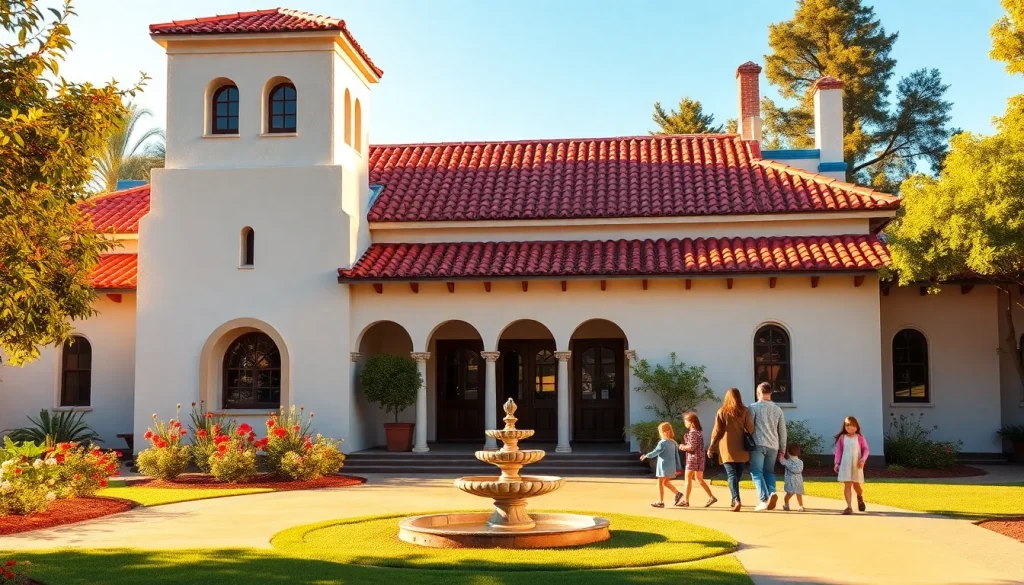
The building is set back from the street behind a low stucco wall and a wrought-iron gate, opening into a landscaped courtyard. Mature coast live oaks and flowering shrubs frame the entrance, creating a buffer from the urban environment. The library is part of the larger Rinconada Park complex, a 20-acre public space that includes picnic areas, tennis courts, a swimming pool, and the Palo Alto Junior Museum & Zoo. This intentional adjacency allows children to flow between nature, play, and reading—a design philosophy that remains remarkably effective nearly a century later.
Why It Is Significant
America’s First Free-Standing Children’s Library
The Palo Alto Children’s Library holds the distinction of being the first free-standing public library in the United States built exclusively for children. While children’s reading rooms existed in larger libraries as early as the 1890s, the concept of a separate building dedicated entirely to young readers was revolutionary. The library’s founding in 1937 embodied the progressive educational ideals of the era, recognizing children as distinct patrons with unique developmental needs. It became a model for children’s library services nationwide, influencing the design and philosophy of similar institutions for decades.
A New Deal Legacy
Constructed under the Works Progress Administration (WPA), the library stands as a tangible legacy of President Franklin D. Roosevelt’s New Deal. The WPA not only provided employment during the Great Depression but also invested in community infrastructure that enriched American cultural life. The Children’s Library was one of thousands of WPA projects, yet its specialized purpose and architectural distinction elevated it to a symbol of hope and progress. The building’s cornerstone, laid in 1937, bears the WPA insignia, a reminder of the federal commitment to education and public welfare during a time of national hardship.
Architectural and Historic Designations
The library is listed on the National Register of Historic Places (NRHP #85001988) as part of the Palo Alto Historic Resources multiple property submission. It is also a designated City of Palo Alto Historic Landmark, ensuring local protection. These designations recognize not only the building’s architectural merit but also its social and educational significance. The library remains an active branch of the Palo Alto City Library system, seamlessly blending historic preservation with contemporary library services.
Historical Timeline
| Year | Event |
|---|---|
| 1890s | Children’s reading rooms emerge in U.S. public libraries, but no separate children’s library exists. |
| 1935 | Palo Alto community leaders propose a dedicated children’s library; WPA approves funding. |
| 1936 | Architect Birge Clark completes designs; construction begins. |
| 1937 | Library opens to the public on November 13; cost approximately $25,000. |
| 1950s–1960s | Expansion of programs; courtyard and garden enhancements. |
| 1979 | Designated a City of Palo Alto Historic Landmark. |
| 1985 | Added to the National Register of Historic Places. |
| 2000s | Seismic retrofitting and accessibility upgrades while preserving historic fabric. |
| 2010s–Present | Continued operation as a vibrant children’s library with modern digital resources. |
Architectural or Natural Characteristics
Spanish Colonial Revival Style
Architect Birge Clark, a Palo Alto native and Stanford graduate, designed the library in the Spanish Colonial Revival style that defines many of the city’s historic buildings. The single-story structure features smooth white stucco walls, a low-pitched red clay tile roof, and arched doorways. Decorative iron grilles cover the windows, and hand-painted tiles accent the entry. The style evokes California’s romanticized mission past while remaining approachable and scaled for children. Clark’s design deliberately avoided the imposing monumentality of adult libraries, instead creating a welcoming, almost residential character.
The Tower and Courtyard
The library’s most distinctive feature is its square tower, topped with a blue tile dome and a wrought-iron weather vane. The tower houses a small reading alcove and serves as a visual landmark, visible from the park. A central courtyard, or patio, forms the heart of the building. Enclosed by the library’s wings, the courtyard features a tiled fountain, shaded benches, and native plantings. This outdoor reading room blurs the boundary between interior and exterior, allowing children to read under the oak trees or participate in open-air storytimes. The courtyard is often called the “Secret Garden,” a name that captures its hidden, magical quality.
Interior Spaces
Inside, the library comprises approximately 2,000 square feet of intimate, light-filled rooms. The main reading room has a beamed ceiling, a fireplace with a decorative tile surround, and built-in bookshelves scaled to child height. Original furnishings, including small wooden tables and chairs, remain in use. A separate program room accommodates story hours and crafts. The children’s restroom features whimsical tile work, and a small kitchenette supports community events. Every detail, from the door handles to the window seats, was designed with young users in mind.
Cultural Meaning
A Community Living Room
For over eight decades, the Palo Alto Children’s Library has functioned as a “community living room” for families. It is a place where generations have experienced their first storytime, checked out their first book, and participated in summer reading programs. The library fosters a sense of belonging and continuity; grandparents who visited as children now bring their grandchildren. This intergenerational connection reinforces the library’s role as a repository of shared memory and civic identity.
Educational Philosophy in Practice
The library’s programming reflects a child-centered educational philosophy that was progressive in the 1930s and remains relevant today. Storytimes, puppet shows, author visits, and hands-on science activities encourage curiosity and literacy. The collection includes picture books, early readers, and materials in multiple languages, serving Palo Alto’s diverse population. Librarians are trained in early childhood development, and the space itself is a teaching tool, demonstrating that learning can be joyful and self-directed.
Symbol of Resilience
As a WPA project, the library symbolizes resilience during economic hardship. Its construction provided jobs, and its ongoing use demonstrates the lasting value of public investment in the arts and education. In an era of digital distraction, the library remains a sanctuary for tactile, imaginative engagement with books and nature. It stands as a quiet counterpoint to Silicon Valley’s high-tech ethos, reminding the community of the enduring power of simple, well-designed public spaces.
Visiting Information
Hours and Admission
- Hours: Typically Tuesday–Saturday, 10:00 AM–6:00 PM; closed Sunday and Monday. Hours may vary seasonally; check the Palo Alto City Library website for current schedule.
- Admission: Free and open to the public. Library cards are free for California residents.
- Parking: Free street parking on Harriet Street and a small lot at Rinconada Park.
Programs and Events
The library offers weekly storytimes for babies, toddlers, and preschoolers, as well as family evening programs. Special events include Día de los Niños celebrations, summer reading challenges, and visits from children’s authors. The courtyard is used for outdoor storytimes in good weather. All programs are free, though some require advance registration due to space limitations.
Nearby Attractions
Visitors can combine a trip to the library with the adjacent Junior Museum & Zoo (free admission), the Palo Alto Art Center, or a stroll through Rinconada Park. The historic Lucie Stern Community Center and the Palo Alto Main Library are within walking distance.
Accessibility
Physical Access
The library is a single-story building with step-free entry from the courtyard. A ramp provides access from the street. Doorways are wide enough for wheelchairs and strollers. Accessible restrooms are available. During the 2000s renovation, care was taken to preserve historic fabric while meeting ADA standards, including the installation of a compliant path of travel and accessible shelving heights.
Inclusive Services
The library offers sensory-friendly storytimes for children on the autism spectrum, large-print and braille books, and assistive listening devices for programs. Staff receive training in inclusive practices. The collection includes materials that reflect diverse cultures, family structures, and abilities, ensuring all children see themselves represented.
Preservation Status
Historic Designations and Protections
The library is protected under Palo Alto’s Historic Preservation Ordinance as a City Landmark (designated 1979) and is listed on the National Register of Historic Places (1985). Any exterior alterations require review by the Historic Resources Board. The building’s interior is not subject to the same level of regulation, but the city has committed to preserving character-defining features such as the tower, courtyard, fireplace, and original built-ins.
Seismic Retrofitting and Modernization
In the early 2000s, the library underwent a sensitive seismic retrofit to meet current safety standards without compromising its historic appearance. The project included reinforcing the foundation, adding shear walls concealed within existing partitions, and upgrading electrical and data systems. The work was recognized for its balance of preservation and functionality, ensuring the building can serve future generations.
Common Misconceptions
“It’s Only for Children”
While the library’s collection and programs are designed for children from birth to age 12, adults are welcome. Parents, caregivers, educators, and researchers frequently use the space. The library also serves as a resource for children’s literature scholars and architecture enthusiasts. Adults without children may visit to appreciate the historic building and garden, though the primary mission remains child-focused.
“The Secret Garden Is a Hidden, Private Space”
The courtyard is often called the “Secret Garden,” leading some to believe it is off-limits or requires special permission. In reality, it is a public space open during library hours. The name derives from its enclosed, intimate design and the sense of discovery it evokes, not from restricted access. Visitors are encouraged to read, relax, and enjoy the fountain.
“The Library Was Built Entirely by the WPA”
While the WPA provided labor and funding, the project was a collaboration between the federal government, the City of Palo Alto, and local community groups. The Palo Alto Library Association and private donors contributed to the furnishings and landscaping. The WPA’s role was crucial, but the library was a community effort from the start.
Map
FAQ
Is the Palo Alto Children’s Library only for children?
While the collection and programs are designed for children up to age 12, adults are welcome to visit, browse, and enjoy the historic building and garden. Researchers and architecture enthusiasts also frequent the library.
Do I need a library card to enter?
No, the library is open to the public. A free library card is required only to borrow materials. California residents can obtain a card with valid identification.
Can the courtyard be rented for private events?
The courtyard is a public space and is not available for private rentals. However, the library occasionally hosts community events and storytimes in the courtyard.
Is the library accessible to wheelchairs and strollers?
Yes, the single-story building has step-free access, wide doorways, and an accessible restroom. A ramp leads from the street to the courtyard entrance.
What is the ‘Secret Garden’?
The ‘Secret Garden’ is the library’s enclosed courtyard, featuring a tiled fountain, benches, and native plants. It is open to all visitors during library hours and is a popular spot for reading and outdoor storytimes.
Leave a Reply