
Short Answer
Introduction
Downtown Palo Alto is far more than a collection of shops, restaurants, and office buildings. It is a living palimpsest where layers of California history—indigenous, Spanish, Mexican, and American—converge with the relentless innovation of Silicon Valley. Situated at the northern edge of the Santa Clara Valley, the area now known as University Avenue and its surrounding streets has evolved from a quiet railroad stop into one of the most dynamic and influential downtown districts in the world. This article traces that evolution, examining the forces that shaped the built environment, the cultural shifts that redefined its character, and the ongoing tension between preservation and progress.
Overview
Downtown Palo Alto’s evolution can be understood as a series of distinct yet overlapping eras. The land was originally inhabited by the Ohlone people, whose presence dates back thousands of years. The Spanish and Mexican periods introduced ranching and a new land-grant system. The arrival of the railroad in 1863 catalyzed the formation of a small settlement, which grew into a town centered on University Avenue. The founding of Stanford University in 1891 provided an enduring intellectual and economic anchor. The mid‑20th century brought suburbanization and a period of decline, followed by a dramatic revival fueled by the technology industry. Today, downtown Palo Alto is a global symbol of innovation, walkability, and the complex interplay between historic preservation and high‑tech wealth.
Key Concepts
Indigenous and Colonial Foundations
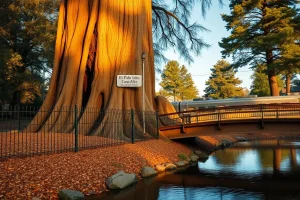
Long before European contact, the area was home to the Puichon band of the Ohlone people, who lived in villages along the creeks and harvested the abundant natural resources. The iconic El Palo Alto redwood tree, from which the city takes its name, still stands along San Francisquito Creek and served as a landmark for both indigenous communities and later Spanish explorers. The Spanish established the vast Rancho San Francisquito land grant, and after Mexican independence, the land passed through several hands before being acquired by American settlers.
The Railroad and the Birth of a Town
The modern downtown owes its existence to the railroad. In 1863, the San Francisco and San Jose Railroad completed a line through the area, and a small station was built near what is now University Avenue. The settlement that grew around the station was originally called “University Park” and later incorporated as the City of Palo Alto in 1894. The railroad not only provided transportation but also dictated the early street grid, with University Avenue emerging as the main commercial spine perpendicular to the tracks.
Stanford University: The Intellectual Anchor
Leland Stanford and Jane Stanford founded Stanford University in 1891 on their Palo Alto Stock Farm. The university’s presence transformed the nascent town, attracting academics, students, and entrepreneurs. Stanford’s early emphasis on engineering and its close ties to industry laid the groundwork for what would become Silicon Valley. The university’s land-use policies, including the development of the Stanford Research Park in the 1950s, directly shaped downtown’s role as a commercial and social hub for the region’s growing tech workforce.
The Technology Boom and Downtown’s Reinvention
While Hewlett‑Packard’s famous garage at 367 Addison Avenue is often cited as the birthplace of Silicon Valley, downtown Palo Alto became the symbolic and functional center of the startup ecosystem. The concentration of venture capital firms on Sand Hill Road and the proximity to Stanford created a feedback loop: entrepreneurs lived, met, and celebrated in downtown cafes and restaurants. The dot‑com boom of the 1990s and the subsequent Web 2.0 and mobile eras cemented University Avenue’s status as a global tech address.
Benefits
Economic Vitality and Innovation
Downtown Palo Alto’s evolution has produced one of the most economically robust small‑city downtowns in the United States. As of 2023, the commercial vacancy rate hovers around 2%, far below the national average. The district is home to a mix of venture capital firms, law offices, and tech startups, alongside a thriving retail and restaurant scene. This density fosters serendipitous encounters that have led to countless business deals and innovations.
Architectural and Cultural Richness
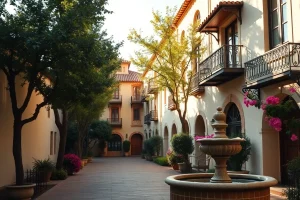
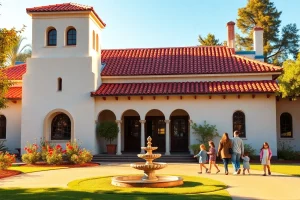
The downtown area boasts a remarkable collection of historic buildings, including the Stanford Theatre (1925), the Varsity Theatre (1927), and the Palo Alto Post Office (1932), which blend Spanish Colonial Revival, Art Deco, and Mission Revival styles. The city’s commitment to historic preservation has maintained a human‑scaled streetscape that contrasts sharply with the glass‑and‑steel campuses of nearby tech giants. Public art installations, such as the “Digital DNA” sculpture in Lytton Plaza, reflect the area’s identity.
Walkability and Quality of Life
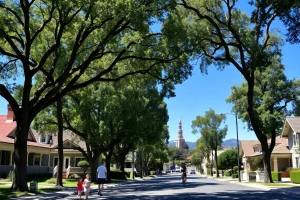
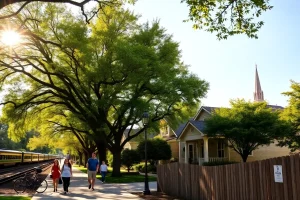
With a Walk Score of 92, downtown Palo Alto is a pedestrian’s paradise. Tree‑lined streets, wide sidewalks, and a mix of uses make it a model of transit‑oriented development. The Caltrain station, located at the foot of University Avenue, provides direct rail access to San Francisco and San Jose, reducing car dependency. The city’s “urban forest” includes over 1,000 street trees downtown, contributing to its distinctive character and environmental benefits.
Challenges
Gentrification and Displacement
The very success of downtown Palo Alto has created acute affordability pressures. Median home prices in the city exceed $3 million, and commercial rents have forced out many long‑standing local businesses. The loss of independent bookstores, hardware stores, and family‑owned restaurants has sparked debates about the soul of the community. A 2022 city report noted that the number of retail businesses serving daily needs declined by 15% over the previous decade, replaced by high‑end boutiques and chain stores.
Traffic Congestion and Parking
Despite excellent transit options, downtown Palo Alto struggles with traffic congestion, particularly during peak commute hours. The influx of tech workers from outside the city has strained the street network, and parking remains a perennial challenge. The city’s 2023 Downtown Parking Study found that on‑street parking occupancy exceeds 85% during weekdays, leading to frustration among visitors and residents alike.
Balancing Preservation and Growth
As demand for office and residential space intensifies, the city faces constant pressure to approve new development. Height limits, historic preservation ordinances, and community opposition have slowed or altered many projects. The tension between maintaining the low‑rise, village‑like atmosphere and accommodating economic growth is a central theme in local politics. A 2024 proposal to redevelop a key downtown block sparked a year‑long review process, illustrating the complexity of change.
“Downtown Palo Alto is a victim of its own success. The very qualities that make it desirable—its human scale, its history, its walkability—are under threat from the economic forces it helped unleash. The challenge is to manage evolution without erasing the past.” — Dr. Elena Torres, urban historian and author of Silicon Cities: The Remaking of the American Downtown
Best Practices
Adaptive Reuse and Historic Preservation
Palo Alto has successfully employed adaptive reuse to maintain its architectural heritage while meeting modern needs. The President Hotel (1929) was converted into luxury apartments, and the Roth Building (1932) now houses a mix of offices and retail. The city’s Historic Resources Board reviews all exterior alterations to designated landmarks, ensuring that new construction complements the existing fabric. Incentive programs, such as the Mills Act contracts, provide property tax reductions for owners who preserve historic structures.
Transit‑Oriented Development
The downtown’s proximity to the Caltrain station has been leveraged to promote transit‑oriented development. The city’s 2030 Comprehensive Plan emphasizes higher‑density, mixed‑use projects within a half‑mile of the station. Recent projects like the 611 Cowper Street development include ground‑floor retail, office space, and residential units, all designed to reduce automobile trips. Bicycle infrastructure, including dedicated lanes and bike parking, has been expanded to support the city’s goal of 20% bike mode share by 2030.
Community Engagement and Participatory Planning
Palo Alto’s planning process is notable for its high level of community involvement. The city regularly conducts surveys, workshops, and charrettes to gather input on downtown projects. The Downtown Palo Alto Community Task Force, formed in 2023, brings together residents, business owners, and city staff to address issues like public safety, cleanliness, and economic diversity. This collaborative approach, while sometimes slow, has helped build consensus around controversial changes.
Tools & Resources
Historical Archives and Research
- Palo Alto Historical Association: Maintains an extensive collection of photographs, maps, and documents at the Palo Alto Art Center.
- Stanford University Libraries: Digital collections include early city directories, Sanborn fire insurance maps, and oral histories.
- City of Palo Alto Historic Inventory: An online database of over 500 designated historic properties, with architectural descriptions and significance statements.
Planning and Development Tools
- Palo Alto Zoning Map: Interactive GIS tool showing zoning districts, height limits, and overlay zones.
- Downtown Parking Study (2023): Detailed analysis of parking supply, demand, and management strategies.
- Palo Alto 2030 Comprehensive Plan: The guiding document for land use, transportation, and urban design.
Walking Tours and Guides
- Palo Alto Stanford Heritage (PAST): Offers guided walking tours of historic downtown and Professorville neighborhoods.
- City of Palo Alto Public Art Map: Locates over 200 public artworks, many in the downtown area.
- Silicon Valley Archives at Stanford: Curated exhibits on the region’s technological and entrepreneurial history.
Future Trends
Remote Work and the Hybrid Downtown
The COVID‑19 pandemic accelerated remote work, reducing daily foot traffic in downtown Palo Alto. However, the district is adapting by emphasizing experience‑based retail, outdoor dining, and cultural events. The city’s 2024 “Downtown for All” initiative aims to reimagine public spaces as flexible venues for community gatherings, pop‑up markets, and art installations. The shift may reduce demand for traditional office space but increase the value of vibrant, mixed‑use environments.
Sustainability and Climate Resilience
Palo Alto has set a goal of carbon neutrality by 2030, and downtown is a testing ground for green building practices. New developments must meet stringent energy codes, and the city is expanding its network of electric vehicle charging stations. The urban forest is being managed to withstand drought and climate change, with a focus on native and adaptive species. Permeable paving and green infrastructure are being integrated into streetscape projects to manage stormwater.
Equitable Economic Development
Addressing the affordability crisis is a top priority. The city is exploring inclusionary zoning policies that require a percentage of new residential units to be affordable. A 2024 pilot program offers grants to independent businesses that provide community‑serving goods and services. There is also growing interest in a “community land trust” model to preserve affordable commercial spaces in perpetuity.
Conclusion
The evolution of downtown Palo Alto is a microcosm of broader American urban history, from indigenous stewardship to railroad town, from suburban decline to tech‑driven renaissance. Its story is one of constant adaptation, shaped by visionary planning, academic influence, and the relentless engine of innovation. As the district navigates the challenges of the 21st century—affordability, sustainability, and the changing nature of work—it must draw on the same creativity and community spirit that have defined its past. The future of downtown Palo Alto will be written not in code alone, but in the careful balance between honoring its heritage and embracing its role as a laboratory for urban life.
FAQ
What is the oldest building in downtown Palo Alto?
The oldest surviving commercial building is the 1895‑era structure at 535 Emerson Street, originally a grocery store. However, the downtown area also contains several Victorian‑era houses that have been converted to commercial use, such as the 1893 Norris House at 124 University Avenue.
How did Stanford University influence downtown Palo Alto?
Stanford’s founding in 1891 brought an influx of residents, visitors, and intellectual capital. The university’s early emphasis on engineering and its later development of the Stanford Research Park created a demand for downtown services, restaurants, and meeting spaces. The proximity also made downtown a natural gathering place for the tech community, fostering the informal networks that characterize Silicon Valley.
Why is downtown Palo Alto so expensive?
A combination of factors drives the high cost: limited land supply due to geographic and policy constraints, extremely high demand from a wealthy tech workforce, strict zoning and height limits that restrict new supply, and the area’s desirability as a walkable, historic, and amenity‑rich district. These forces have made it one of the most expensive commercial and residential markets in the United States.
What is being done to preserve downtown’s historic character?
The city has a robust historic preservation program that includes a Historic Resources Board, a local register of historic properties, and design guidelines for new construction in historic districts. Incentives like the Mills Act provide tax relief for owners who maintain historic buildings. Additionally, community organizations such as Palo Alto Stanford Heritage (PAST) advocate for preservation and offer educational walking tours.
Leave a Reply