Short Answer
Introduction
Palo Alto, nestled at the southern edge of the San Francisco Bay, is synonymous with innovation, world‑class universities, and a distinctive community spirit. Yet its story began long before microprocessors and venture capital. This article offers a comprehensive, evergreen overview of Palo Alto’s evolution, providing historians, planners, and curious readers with a reliable reference.
Table of Contents
- Overview
- Key Concepts
- Benefits of Understanding Palo Alto’s History
- Challenges in Preserving the Past
- Best Practices for Historical Research
- Tools & Resources
- Future Trends in Heritage Management
- Conclusion
Overview
Geography and Early Inhabitants
The area now known as Palo Alto sits on the historic Ohlone territory, specifically the Tamien and Muwekma peoples, who cultivated the land for millennia. Archaeological evidence, such as shell middens and obsidian tools, dates human activity to at least 2,500 BC.
Spanish and Mexican Period (1769–1848)
Following the Portolá expedition of 1769, the Spanish established the Mission Santa Clara de Asís, which claimed vast tracts of the peninsula. In 1821, Mexico gained independence, and the secularization of missions led to large land grants, notably the 1844 Rancho San Antonio owned by Ygnacio Concepción Pérez.
American Annexation and Early Settlement (1848–1900)
After the 1848 Treaty of Guadalupe Hidalgo, California entered the United States. The Gold Rush spurred migration; by the 1860s, a modest farming community emerged along what is now University Avenue. The arrival of the Southern Pacific Railroad in 1864 facilitated trade and population growth.
Stanford University and City Incorporation (1885–1925)
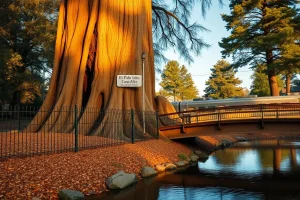
In 1885, Leland and Jane Stanford purchased 8,000 acres of the former Rancho, founding Stanford University in 1891. The university’s presence attracted academics, entrepreneurs, and a wave of residential development. Palo Alto officially incorporated on April 23, 1888, adopting the name “Palo Alto” after the abundant coastal redwoods (Spanish: *palo alto* = “tall tree”).
The Birth of Silicon Valley (1939–1970)
Hewlett‑Packard (HP) was founded in a Palo Alto garage in 1939, a moment often cited as the genesis of Silicon Valley. The establishment of the Stanford Research Institute (SRI) in 1946 and later the Xerox Palo Alto Research Center (PARC) in 1970 cemented the city’s role as a cradle of computing breakthroughs.
Modern Growth and Demographic Shifts (1970–Present)
From the 1970s onward, Palo Alto experienced rapid residential densification, high‑tech employment booms, and a rise in property values. According to the 2020 U.S. Census, the city’s population reached 68,572, with a median household income of $165,000—well above the national average.
Key Concepts
Urban‑Tech Symbiosis
The intertwining of municipal planning and technology companies defines Palo Alto’s character. Zoning policies that favor mixed‑use development have enabled campuses to blend seamlessly with residential neighborhoods.
Preservation vs. Development
Balancing historic preservation with the pressure for new office space is a recurring theme. The city’s Historic Preservation Ordinance (adopted 1975) protects over 150 structures, including the Gamble House (1908) and the original HP garage.
Community‑Driven Innovation
Grassroots initiatives such as the Palo Alto Network (est. 1995) and the annual “Tech for Good” hackathon illustrate how civic engagement fuels technological solutions to local challenges like water conservation and affordable housing.
Benefits of Understanding Palo Alto’s History
- Informed Urban Planning: Historical context guides zoning decisions that respect cultural heritage while accommodating growth.
- Economic Insight: Recognizing the city’s role in early semiconductor development helps investors identify emerging clusters.
- Civic Identity: Residents gain a sense of place, fostering community cohesion and stewardship of historic assets.
- Educational Value: Schools can integrate local history into curricula, enhancing student engagement with STEM and humanities.
Challenges in Preserving the Past
Rising Property Values
Between 2010 and 2022, median home prices rose from $1.1 million to $2.4 million (SF Chronicle, 2023). This escalation pressures owners to demolish older structures for higher‑density projects.
Limited Funding for Conservation
While the city allocates $2 million annually to the Historic Preservation Program, demand for grants exceeds supply, leaving many modest‑scale properties vulnerable.
Technological Obsolescence
Rapid tech turnover can render once‑cutting‑edge facilities obsolete, complicating decisions about adaptive reuse versus demolition.
Best Practices for Historical Research
Primary Source Verification
Utilize land grant archives at the California State Archives, Stanford’s Special Collections, and oral histories from the Palo Alto Historical Association.
Geospatial Analysis
Overlay historic maps (e.g., 1903 Sanborn fire insurance maps) with modern GIS layers to identify surviving structures and changes in land use.
Community Collaboration
Engage neighborhood associations early. Their anecdotal knowledge often fills gaps left by official records.
Tools & Resources
Digital Archives
- Online Archive of California – searchable digitized newspapers and photographs.
- Stanford Special Collections – manuscripts related to HP, PARC, and early Silicon Valley.
Mapping Platforms
| Tool | Primary Use | Cost |
|---|---|---|
| ArcGIS Online | Historic GIS overlays | Subscription |
| Google Earth Engine | Time‑series land‑cover analysis | Free |
| HistoricMapWorks | Georeferencing Sanborn maps | Free/Donations |
Funding Opportunities
The National Trust for Historic Preservation offers the Historic Preservation Fund Grant, and the California Office of Historic Preservation provides matching grants for local projects.
Future Trends in Heritage Management
Digital Storytelling
Augmented‑reality (AR) tours are being piloted along University Avenue, allowing visitors to view 3‑D reconstructions of the 1900s “Palo Alto” streetscape through smartphone lenses.
Climate‑Resilient Preservation
With sea‑level rise projections of 1.2 feet by 2100 for the Bay Area (USGS, 2022), historic buildings near the Baylands require flood‑mitigation retrofits that respect architectural integrity.
Inclusive Narrative Expansion
Emerging scholarship emphasizes the Ohlone perspective, integrating indigenous place‑names and stewardship practices into public signage and curricula.
Conclusion
Palo Alto’s narrative is a layered tapestry of indigenous stewardship, colonial transformation, academic ambition, and technological disruption. By grounding contemporary decisions in this rich past, policymakers, entrepreneurs, and residents can shape a future that honors heritage while fostering innovation. The city’s story is not static; it evolves with each new breakthrough, yet the foundational threads—community, curiosity, and a commitment to place—remain constant.
FAQ
What indigenous people originally lived in Palo Alto?
The area was inhabited by the Ohlone people, specifically the Tamien and Muwekma groups, who lived there for thousands of years before European contact.
When was Palo Alto incorporated?
Palo Alto was officially incorporated on April 23, 1888, taking its name from the Spanish phrase for 'tall tree,' referring to the coastal redwoods.
Why is Palo Alto considered the birthplace of Silicon Valley?
Hewlett-Packard was founded in a Palo Alto garage in 1939, and later institutions like Stanford Research Institute and Xerox PARC pioneered many computing innovations, establishing the region as a tech hub.
How does Palo Alto balance historic preservation with development?
The city's Historic Preservation Ordinance protects over 150 structures, but rising property values and demand for office space create ongoing tension between conservation and new construction.

Leave a Reply