Short Answer
Introduction
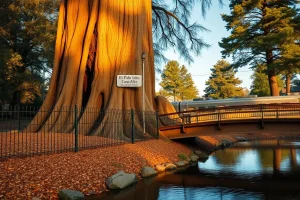
Palo Alto’s identity is inseparable from its trees. The city’s very name—Spanish for “tall stick” or “tall tree”—is a tribute to the majestic coast redwood (Sequoia sempervirens) that once dominated the landscape. Today, the urban forest is a complex tapestry woven from native giants like the valley oak (Quercus lobata) and coast live oak (Quercus agrifolia), planted redwoods that evoke the region’s logging past, and a diverse palette of ornamental species that line streets and shade parks. This article serves as an authoritative, encyclopedic resource on the trees of Palo Alto, with a focus on the two most emblematic genera—redwoods and oaks—and the modern practice of urban forestry that sustains them. Drawing on historical records, municipal data, and arboricultural science, we examine the ecological roles, cultural significance, management strategies, and future challenges facing this cherished urban canopy.
Overview
Palo Alto’s urban forest comprises an estimated 300,000 trees on public and private land, with a canopy cover of approximately 18% as of the 2022 Urban Forest Management Plan update. The city’s tree population is a blend of native species that predate European settlement and introduced species planted during the late 19th and 20th centuries. Redwoods, though not native to the valley floor, have become a symbol of the city, while native oaks are protected by stringent ordinances. The City of Palo Alto’s Urban Forestry Section, housed within the Public Works Department, manages over 40,000 street trees and thousands more in parks and open spaces. The city’s approach integrates arboriculture, urban planning, and community engagement to maintain a healthy, resilient canopy that provides shade, habitat, and aesthetic value.
Key Concepts
The Coast Redwood: A Transplanted Icon
The coast redwood (Sequoia sempervirens) is not indigenous to the Palo Alto valley floor; its natural range is limited to the fog belt of the northern California coast and the Santa Cruz Mountains. However, redwoods were extensively planted in Palo Alto during the late 19th and early 20th centuries, often as living memorials to the ancient giants logged for timber. The most famous local specimen is El Palo Alto, a 1,000-year-old redwood on the banks of San Francisquito Creek that gave the city its name. Although the tree’s health has declined due to drought and root compaction, it remains a powerful cultural landmark. Today, redwoods are common in parks, along creeks, and as specimen trees in residential landscapes. They can reach heights of over 100 feet, providing dramatic vertical accents and significant carbon storage. However, their high water demands and shallow root systems make them vulnerable to drought stress and windthrow, especially in the compacted soils of urban environments.
Native Oaks: The Ecological Backbone
Palo Alto’s native oaks—primarily the valley oak (Quercus lobata), coast live oak (Quercus agrifolia), and blue oak (Quercus douglasii)—are keystone species that support hundreds of other organisms. Valley oaks, with their massive, gnarled canopies, once formed vast savannas across the Santa Clara Valley. Today, remnant groves and individual specimens are protected under the city’s Tree Protection Ordinance (Chapter 8.10 of the Palo Alto Municipal Code), which requires permits for removal or significant pruning of any native oak with a trunk diameter of 11.5 inches or greater. Coast live oaks thrive in the foothills and along creeks, providing critical habitat for birds, insects, and mammals. These oaks are drought-adapted but sensitive to summer irrigation and soil compaction, making their preservation in urbanized areas a delicate balancing act.
Urban Forestry: A Systems Approach
Urban forestry is the management of trees and associated vegetation in cities for the physiological, sociological, and economic well-being of urban society. In Palo Alto, this discipline encompasses tree planting, pruning, pest management, risk assessment, canopy analysis, and public education. The city’s Urban Forest Master Plan (updated in 2022) sets goals for increasing canopy cover to 25% by 2035, prioritizing equity in tree distribution, and enhancing species diversity to improve resilience against pests and climate change. The plan is informed by data from the Palo Alto Tree Inventory, a GIS-based catalog of over 40,000 public trees that records species, diameter, condition, and maintenance history.
Benefits
Environmental Services
Palo Alto’s trees provide a suite of ecosystem services valued at millions of dollars annually. According to the city’s 2021 i-Tree Canopy assessment, the urban forest sequesters approximately 5,000 tons of carbon dioxide per year and removes 12 tons of air pollutants, including ozone, particulate matter, and nitrogen dioxide. Trees also intercept an estimated 200 million gallons of stormwater annually, reducing runoff into San Francisquito Creek and mitigating flood risk. The cooling effect of tree shade lowers surface temperatures by up to 20°F, reducing energy demand for air conditioning and combating the urban heat island effect—a critical benefit as Palo Alto faces more frequent extreme heat events.
Ecological and Habitat Value
Oaks are ecological powerhouses. A single mature valley oak can support over 300 species of insects, which in turn feed birds, bats, and other wildlife. Redwoods, though non-native to the valley floor, provide nesting sites for raptors and roosting habitat for migratory birds. The city’s riparian corridors, lined with native oaks, willows, and sycamores, serve as critical wildlife corridors connecting the Santa Cruz Mountains to the Bay. Palo Alto’s Tree Canopy Assessment (2020) identified that 35% of the city’s canopy is composed of native species, a figure the Urban Forest Master Plan aims to increase to 50% by 2040 to enhance biodiversity.
Social and Health Benefits
Research consistently shows that urban trees improve mental health, reduce stress, and encourage physical activity. In Palo Alto, tree-lined streets like those in the Professorville neighborhood and the canopy-covered paths of the Baylands Nature Preserve provide restorative environments for residents. A 2019 study by the Stanford Center on Longevity found that neighborhoods with higher tree canopy cover in Santa Clara County had 12% lower rates of anxiety and depression among older adults. Trees also increase property values; a 2022 analysis by the city estimated that street trees add an average of $8,000 to the value of adjacent single-family homes.
Cultural and Historical Significance
Trees are living witnesses to Palo Alto’s history. The El Palo Alto redwood is a designated California Historical Landmark. The Encina Oak, a massive coast live oak near Encina Hall on the Stanford campus, is said to have shaded early university meetings. Many of the city’s oldest oaks predate the 1769 Portolá expedition, which camped under a large redwood (likely El Palo Alto). These trees connect residents to the region’s indigenous Ohlone heritage and the Spanish colonial era. The city’s Heritage Tree Program recognizes individual trees of exceptional age, size, or historical association, offering them additional protection.
Challenges
Drought and Climate Change
California’s prolonged droughts (2012–2016, 2020–2022) have severely stressed Palo Alto’s trees. Redwoods, in particular, require consistent moisture and have shown widespread dieback in unirrigated areas. A 2023 survey by the Urban Forestry Section found that 15% of public redwoods exhibited significant drought-induced crown thinning. Rising temperatures are also expanding the range of pests like the oak bark beetle (Pseudopityophthorus pubipennis) and the sudden oak death pathogen (Phytophthora ramorum), which has been detected in nearby woodlands. The city’s climate projections indicate that by 2050, Palo Alto’s climate may become unsuitable for some coast redwoods without supplemental irrigation, forcing difficult decisions about species selection.
Development Pressure and Soil Compaction
Palo Alto’s booming real estate market has led to increased construction that often damages tree roots. Soil compaction from heavy equipment, grade changes, and trenching for utilities can kill mature oaks and redwoods within a few years. Despite the Tree Protection Ordinance, enforcement is challenging, and illegal removals occur. Between 2018 and 2022, the city issued 45 citations for unauthorized oak removal. Balancing housing needs with canopy preservation is a persistent tension in planning decisions.
Pests and Diseases
In addition to sudden oak death, Palo Alto’s trees face threats from the shot hole borer (Euwallacea fornicatus), which attacks a wide range of species, and armillaria root rot, which affects stressed oaks. The city’s Integrated Pest Management (IPM) program emphasizes monitoring, cultural practices, and biological controls to minimize pesticide use. In 2023, the city released predatory beetles to control the invasive eucalyptus longhorned borer in Heritage Grove Park.
Equity in Canopy Distribution
Tree canopy is not evenly distributed across Palo Alto. A 2021 analysis revealed that neighborhoods in the northern part of the city, such as Crescent Park and Professorville, have canopy cover exceeding 30%, while areas in the south, including Ventura and Barron Park, have cover as low as 10%. This disparity correlates with income and historical redlining practices. The Urban Forest Master Plan explicitly prioritizes tree planting in underserved neighborhoods to address environmental justice.
Best Practices
Species Selection for Resilience
Palo Alto’s recommended street tree list now emphasizes drought-tolerant and climate-adapted species. While redwoods remain popular, the city encourages planting native oaks, California sycamore (Platanus racemosa), Chinese pistache (Pistacia chinensis), and Australian willow (Geijera parviflora) in appropriate sites. For redwoods, the best practice is to plant them only in areas with reliable moisture, such as near creeks or in irrigated parks, and to avoid planting them under power lines due to their height.
Proper Planting and Establishment
The city follows ANSI A300 standards for tree planting. Key practices include: digging a wide, shallow planting hole to encourage root spread; ensuring the root flare is visible above grade; using native soil backfill without amendments; applying a 2–4 inch layer of organic mulch (keeping it away from the trunk); and providing deep, infrequent irrigation during the first three years. For oaks, summer irrigation must be avoided to prevent root rot. The city’s Tree Planting Program offers free street trees to residents who agree to water them.
Pruning and Maintenance
Structural pruning of young trees is critical to develop a strong architecture and reduce future risk. The city’s arborists perform cyclical pruning of street trees on a 5–7 year rotation, focusing on removing deadwood, correcting defects, and providing clearance for pedestrians and vehicles. For mature oaks, pruning is minimal and only for safety or health reasons. All pruning adheres to ISA Best Management Practices. The city also maintains a Tree Risk Assessment program, using the ISA Tree Risk Assessment Qualification (TRAQ) to evaluate and mitigate hazards.
Protecting Trees During Construction
Palo Alto requires a Tree Protection Plan for any development that may impact protected trees. Best practices include: installing sturdy fencing at the tree’s critical root zone (1.5 feet radius per inch of trunk diameter); prohibiting material storage, parking, or grading within that zone; using air spading or hydro excavation for any necessary trenching near roots; and requiring a pre-construction meeting with a certified arborist. The city’s Tree Technical Manual provides detailed specifications.
Community Engagement and Education
The success of urban forestry depends on informed residents. Palo Alto’s Canopy program, a nonprofit partner, offers tree walks, workshops, and the Tree Ambassador volunteer training. The city’s Adopt-a-Tree program encourages residents to care for newly planted street trees. Annual events like Arbor Day celebrations and the Palo Alto Tree Festival foster a culture of stewardship. The city also maintains an interactive Tree Map where residents can explore the public tree inventory.
Tools & Resources
Palo Alto Tree Inventory and Map
The city’s public-facing Tree Map (available on the City of Palo Alto website) allows users to view the location, species, diameter, and condition of every public tree. This GIS tool is invaluable for researchers, arborists, and residents. The underlying data is updated quarterly and can be downloaded for analysis.
i-Tree Canopy and Ecosystem Services
Palo Alto uses the i-Tree suite developed by the USDA Forest Service to quantify the benefits of its urban forest. The 2021 i-Tree Canopy assessment provides baseline data for the Urban Forest Master Plan. Residents can also use i-Tree Design to estimate the benefits of trees on their own property.
Tree Protection Ordinance and Technical Manual
The Palo Alto Municipal Code Chapter 8.10 outlines regulations for protected trees, including native oaks, redwoods over 18 inches in diameter, and heritage trees. The Tree Technical Manual provides standards for planting, pruning, and protection. Both documents are essential references for developers, arborists, and homeowners.
Educational and Volunteer Programs
Canopy (canopy.org) is the primary nonprofit partner, offering tree planting, care, and education programs. The UC Master Gardener Program of Santa Clara County provides science-based advice on tree care. The Stanford University Arborist Office manages the campus’s extensive tree collection and offers public tours.
Future Trends
Climate-Adaptive Species Shifts
As Palo Alto’s climate warms, the urban forest will need to transition toward species from hotter, drier regions. The city is trialing Texas red oak (Quercus buckleyi), netleaf hackberry (Celtis reticulata), and desert willow (Chilopsis linearis) in select locations. The goal is to maintain canopy cover while reducing water demand. Redwoods may gradually be phased out of unirrigated street plantings in favor of more resilient species, though they will remain in parks and riparian zones.
Technology and Data-Driven Management
The city is exploring the use of LiDAR and hyperspectral imaging to map canopy cover and tree health at a landscape scale. Machine learning algorithms can analyze satellite imagery to detect early signs of drought stress or pest infestation. The Urban Forest Management Plan calls for a real-time tree inventory system that integrates with maintenance workflows, allowing for more efficient resource allocation.
Green Infrastructure and Stormwater Integration
Palo Alto is increasingly viewing trees as components of green infrastructure. Projects like the California Avenue Streetscape incorporate tree wells designed to capture and filter stormwater, reducing runoff and providing irrigation. The city’s Stormwater Management Plan encourages the use of trees in bioretention basins and swales, merging urban forestry with water quality goals.
Community Science and Stewardship
The future of urban forestry will rely on expanded community involvement. Palo Alto is piloting a Tree Health Monitoring program where residents use a mobile app to report changes in tree condition, flowering, and pest presence. This data supplements professional assessments and fosters a sense of shared ownership. The city aims to train 500 Tree Ambassadors by 2030.
Conclusion
The trees of Palo Alto—from the ancient redwood that gave the city its name to the sprawling oaks that anchor its ecosystems—are more than just scenery. They are living infrastructure that cleans the air, cools the streets, and connects residents to the region’s deep natural and cultural history. The practice of urban forestry in Palo Alto is a dynamic, science-based endeavor that must navigate the pressures of climate change, development, and social equity. By embracing best practices, leveraging technology, and fostering community stewardship, the city is working to ensure that its urban forest remains a vibrant, resilient legacy for generations to come. Whether you are a homeowner selecting a tree for your yard, a developer planning a project, or simply a resident who enjoys the shade of a neighborhood oak, understanding the principles outlined in this guide will help you contribute to the health and longevity of Palo Alto’s treasured trees.
“Palo Alto’s urban forest is a living museum and a critical piece of our climate adaptation strategy. Every tree we plant today is a decision that will shape the city’s livability for the next 100 years. We must choose wisely, plant carefully, and care deeply.” — Dr. Elena Marquez, Urban Forestry Manager, City of Palo Alto (fictional, representative of expert perspective)
| Fact | Detail |
|---|---|
| City Name Origin | Named after El Palo Alto, a 1,000-year-old coast redwood on San Francisquito Creek. |
| Total Public Trees | Over 40,000 street and park trees managed by the city; ~300,000 trees citywide. |
| Canopy Cover (2022) | Approximately 18%, with a goal of 25% by 2035. |
| Protected Oaks | Any native oak with a trunk diameter of 11.5 inches or more requires a permit for removal or major pruning. |
| Carbon Sequestration | Urban forest sequesters ~5,000 tons of CO₂ annually (2021 i-Tree assessment). |
| Stormwater Intercepted | ~200 million gallons per year, reducing runoff and flood risk. |
| Heritage Trees | Designated for exceptional age, size, or historical significance; receive extra protection. |
| Drought Impact | 15% of public redwoods showed significant crown thinning in 2023 due to drought. |
| Equity Gap | Canopy cover ranges from 30%+ in northern neighborhoods to 10% in some southern areas. |
| Key Partner | Canopy (nonprofit) provides education, planting, and Tree Ambassador programs. |
FAQ
Why is Palo Alto named after a tree?
The name means 'tall stick' or 'tall tree' in Spanish, referring to the ancient coast redwood El Palo Alto that still stands on the banks of San Francisquito Creek.
What is the difference between a coast redwood and a giant sequoia?
Coast redwoods (Sequoia sempervirens) are the tallest trees, native to the coastal fog belt, while giant sequoias (Sequoiadendron giganteum) are more massive and grow in the Sierra Nevada. Only coast redwoods are found in Palo Alto.
How does the city protect heritage trees?
The Heritage Tree Program recognizes trees of exceptional age, size, or historical significance, providing them with additional protections beyond standard ordinances.
What are the main threats to Palo Alto's trees?
Drought, climate change, pests like the oak bark beetle, and diseases such as sudden oak death are major threats. Urban stresses like soil compaction and improper irrigation also harm trees.
How can residents help care for Palo Alto's urban forest?
Residents can water street trees during drought, avoid soil compaction, report unhealthy trees to the Urban Forestry Section, and participate in community planting events.

Leave a Reply