Short Answer
Location
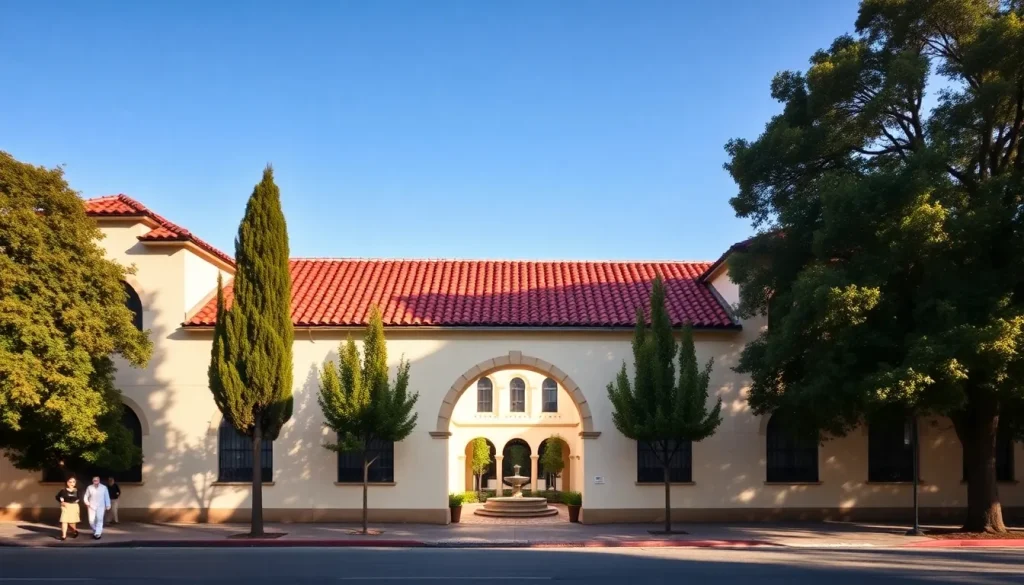
The Palo Alto Medical Clinic Building stands at 300 Homer Avenue, at the corner of Homer Avenue and Bryant Street, in the heart of downtown Palo Alto, California. Situated within the Central Palo Alto neighborhood, the structure occupies a prominent site just two blocks from the bustling University Avenue commercial district and approximately one mile from the Stanford University campus. The building’s geographic coordinates are 37.4435° N, 122.1605° W. Its location reflects the early 20th-century expansion of medical services into suburban downtowns, placing specialized care within walking distance of residential areas and public transit. The surrounding streetscape blends historic structures with modern infill, yet the clinic’s distinctive silhouette—a low-slung, tile-roofed edifice—remains instantly recognizable.
Why It Is Significant
The Palo Alto Medical Clinic Building is a landmark of both medical history and architectural heritage. Founded in 1930, it housed one of the first multi-specialty group medical practices west of the Mississippi River, directly inspired by the Mayo Clinic model. This innovative approach brought together physicians from diverse specialties under one roof, fostering collaboration and comprehensive patient care—a radical departure from the era’s norm of solo practitioners. The clinic pioneered prepaid health plans, laying groundwork for modern managed care, and its success catalyzed the growth of the Palo Alto Medical Foundation, now part of Sutter Health. Architecturally, the building is a masterful example of Spanish Colonial Revival design by Birge Clark, the preeminent local architect of the interwar period. Its harmonious proportions, red-tile roof, and serene courtyard embody the regional aesthetic while serving a forward-looking medical mission. Designated a Palo Alto Historic Landmark, the building remains a functioning medical facility, bridging nearly a century of healthcare evolution.
Historical Timeline
| Year | Event |
|---|---|
| 1929 | Dr. Russel V. Lee, Dr. Thomas G. Inman, Dr. Blake C. Wilbur, and Dr. E. W. “Bill” Cleary conceive a multi-specialty group practice inspired by the Mayo Clinic. |
| 1930 | The Palo Alto Medical Clinic opens at 300 Homer Avenue in a purpose-built Spanish Colonial Revival building designed by Birge Clark. Original specialties include internal medicine, surgery, obstetrics, and pediatrics. |
| 1937 | First major expansion adds a second story and east wing, seamlessly matching the original architecture. |
| 1940s–1950s | Clinic pioneers prepaid health plans for Stanford University employees and local families, a precursor to modern HMOs. |
| 1954 | Further expansion enlarges the building to accommodate growing patient demand and new specialties. |
| 1981 | The Palo Alto Medical Foundation (PAMF) is established as a not-for-profit healthcare organization, with the clinic as its nucleus. |
| 1985 | The building is designated a City of Palo Alto Historic Landmark, recognizing its architectural and cultural significance. |
| 1993 | PAMF affiliates with Sutter Health, ensuring long-term stability while retaining local governance. |
| 2000s–present | Ongoing interior renovations modernize clinical spaces while preserving the historic exterior and courtyard. The building remains an active medical office facility. |
Architectural or Natural Characteristics
Spanish Colonial Revival Design
The building exemplifies the Spanish Colonial Revival style that dominated California architecture in the early 20th century. Its low, horizontal massing is capped by a hipped roof of red clay barrel tiles, with deep overhanging eaves that provide shade. Exterior walls are finished in smooth, cream-colored stucco, punctuated by recessed, arched windows and doorways. A central courtyard, originally open to the sky, features a fountain and lush plantings, creating a tranquil waiting area that blurs the line between indoors and outdoors—a deliberate therapeutic choice. Decorative iron grilles, hand-painted tile accents, and heavy wooden doors reinforce the Mediterranean character.
Birge Clark’s Vision
Architect Birge Clark (1893–1989), a Stanford graduate and Palo Alto’s most prolific designer of the period, shaped much of the city’s civic and commercial identity. For the clinic, he adapted the Spanish Colonial Revival vocabulary to a modern medical program. The original 1930 structure was a single-story U-shaped building wrapped around the courtyard. Clark’s design emphasized natural light, cross-ventilation, and a non-institutional feel—patients entered through a welcoming arcade rather than a sterile lobby. Subsequent expansions by Clark and his firm maintained the architectural integrity, adding a second story and wings that respected the original scale and detailing.
Interior Evolution
While the exterior remains largely intact, the interior has been sensitively updated to meet contemporary healthcare standards. Original waiting rooms with beamed ceilings and tile fireplaces have been adapted into reception areas and consultation rooms. The courtyard, once open, is now enclosed with a skylight, preserving the sense of airiness while improving climate control. Historic light fixtures and wrought-iron details have been retained wherever possible, offering glimpses of the building’s 1930s origins.
Cultural Meaning
The Palo Alto Medical Clinic Building embodies a transformative moment in American medicine. It represents the shift from isolated, home-based doctoring to collaborative, institution-based care. The founders’ philosophy—summed up by Dr. Russel V. Lee’s dictum, “The patient is the center of the medical universe”—permeated the design and operation of the clinic. This patient-centered ethos, combined with the egalitarian spirit of group practice, attracted physicians who valued teamwork over competition. The clinic became a model emulated across the country, influencing the development of large medical groups and prepaid health plans. For the Palo Alto community, the building is a cherished symbol of accessible, high-quality care. Its courtyard, once filled with patients reading under olive trees, remains a powerful image of healing and respite. The structure also reflects the deep ties between Stanford University and the city; several founders were Stanford Medical School faculty, and the clinic served generations of Stanford families. Today, as part of Sutter Health, the building continues to function as a place of healing, its historic walls witnessing the ongoing evolution of medicine.
Visiting Information
The Palo Alto Medical Clinic Building is an active medical facility, not a museum. Public access is limited to patients with appointments. However, the exterior and courtyard can be viewed from the public sidewalk, and architectural enthusiasts are welcome to appreciate the building from the street. The main entrance faces Homer Avenue, with a small parking lot accessible from Bryant Street. Metered street parking is available nearby, and the site is a short walk from the Palo Alto Caltrain station (0.5 miles) and several VTA bus lines. Visitors should respect patient privacy and avoid entering clinical areas without authorization. For those interested in the building’s history, the Palo Alto Historical Association occasionally offers guided walking tours that include the clinic.
- Address: 300 Homer Avenue, Palo Alto, CA 94301
- Hours: Exterior viewable 24/7; interior access by appointment only (typically Monday–Friday, 8:00 AM–5:00 PM)
- Parking: Limited patient parking lot; metered street parking on Homer and Bryant
- Public Transit: Caltrain Palo Alto Station (0.5 mi), VTA Bus Routes 22, 522
Accessibility
As a functioning healthcare facility, the building complies with all current Americans with Disabilities Act (ADA) standards. Accessible parking spaces are located in the adjacent lot. The main entrance features a ramp, and all public floors are served by elevators. Restrooms are equipped with grab bars and accessible stalls. The historic courtyard, now enclosed, is wheelchair-accessible via ground-level entries. Service animals are welcome. Patients with specific accessibility needs are encouraged to contact the clinic in advance.
Preservation Status
The building was designated a City of Palo Alto Historic Landmark in 1985, listed under the local Historic Inventory. This designation protects the exterior from significant alteration and ensures that any changes undergo design review by the Historic Resources Board. The structure is classified as a Category 1 historic resource, denoting its exceptional significance. Over the decades, the owners have undertaken careful restoration projects, including seismic retrofitting, roof tile replacement with matching materials, and stucco repair using historically appropriate techniques. The interior, while modernized, retains key character-defining features such as the courtyard skylight, original tilework, and wrought-iron details. The building is not listed on the National Register of Historic Places but is considered eligible. Its continued use as a medical facility provides a sustainable model for preservation through adaptive reuse.
Common Misconceptions
Map
FAQ
Can I tour the inside of the Palo Alto Medical Clinic Building?
The building is an active medical facility, so interior access is limited to patients with appointments. The exterior and courtyard can be viewed from the public sidewalk. Guided architectural tours occasionally include the building; check with the Palo Alto Historical Association.
What makes this building architecturally significant?
It is a well-preserved example of Spanish Colonial Revival architecture by Birge Clark, featuring a red tile roof, stucco walls, arched windows, and a central courtyard. The design intentionally created a calming, non-institutional environment for patients.
Who were the founders of the Palo Alto Medical Clinic?
The clinic was founded in 1930 by four physicians: Dr. Russel V. Lee, Dr. Thomas G. Inman, Dr. Blake C. Wilbur, and Dr. E. W. “Bill” Cleary. They were inspired by the Mayo Clinic’s group practice model.
Is the building still used for medical purposes?
Yes, it continues to operate as a medical office building, housing primary care and specialty services as part of the Palo Alto Medical Foundation, a Sutter Health affiliate.
How did the clinic influence modern healthcare?
It was one of the first multi-specialty group practices on the West Coast, pioneering collaborative care and prepaid health plans that foreshadowed today’s HMOs and integrated healthcare systems.




Leave a Reply