Short Answer
Quick Answer
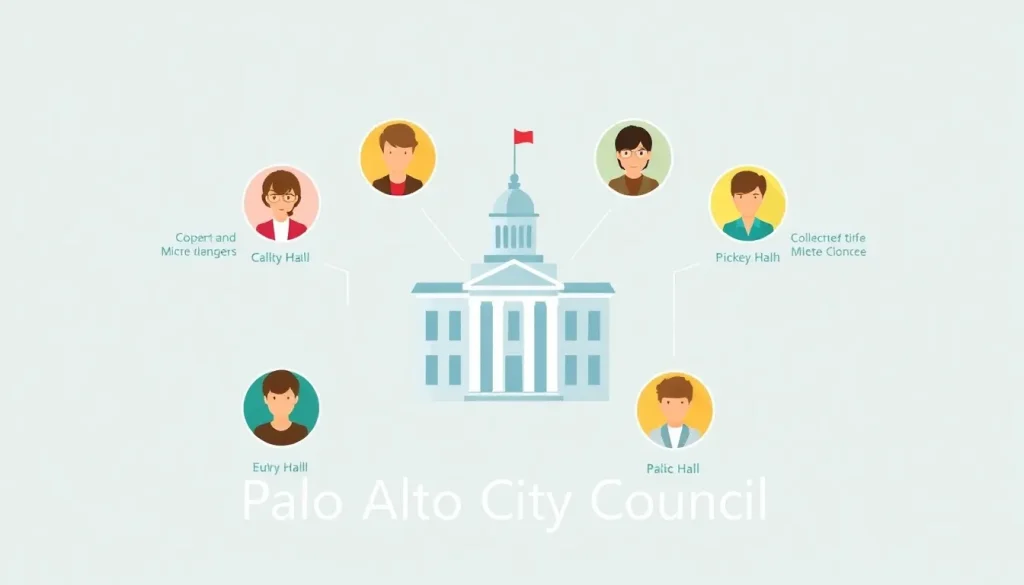
The Palo Alto City Council is the legislative and policy-making body for the City of Palo Alto, California. It consists of seven members elected by districts and at-large, operating under a council-manager form of government. The council sets city policies, adopts ordinances, approves the budget, and appoints the city manager, while residents can participate by attending meetings, speaking during public comment, or accessing council records online.
What Is How Palo Alto’s City Council Works?
The Palo Alto City Council serves as the primary governing authority for the city, responsible for establishing laws, setting policy direction, and overseeing the municipal organization. Palo Alto operates under a council-manager system, meaning the elected council appoints a professional city manager to execute its policies and manage day-to-day operations. This structure separates political leadership from administrative functions, ensuring that policy decisions are made by elected representatives while implementation is handled by a trained administrator.
The council’s scope includes adopting ordinances and resolutions, approving the annual budget, setting tax rates, appointing the city manager and city attorney, and serving as the governing board for the city’s utilities. It also acts as the local redevelopment authority and housing authority. The council’s decisions affect everything from land use and public safety to parks, libraries, and utility rates.
Historically, Palo Alto was incorporated in 1894 and initially governed by a board of trustees. The city adopted the council-manager form in 1950, a model that remains in place today. For decades, all seven council members were elected at-large. In 2020, following a legal challenge under the California Voting Rights Act, the city transitioned to a district-based election system with five single-member districts and two at-large seats. This change aimed to improve representation for all neighborhoods.
Who Manages It?
The City Council is the elected governing body, but its work is supported by several key offices and officials. The City Clerk’s Office manages council agendas, minutes, records, and public notices. The City Manager, appointed by the council, oversees all city departments and implements council policies. The City Attorney provides legal advice to the council and represents the city in legal matters. The council itself is composed of seven members, each serving four-year terms. The mayor and vice mayor are selected annually by the council from among its members. The mayor presides over meetings and represents the city at official functions but has no administrative authority beyond that of a council member.
Residents can contact the council via email at city.council@cityofpaloalto.org or by mail at City Hall, 250 Hamilton Avenue, Palo Alto, CA 94301. The City Clerk’s office can be reached at (650) 329-2571 for questions about agendas, minutes, or public records.
Current Status
As of 2025, the council continues to operate under the district-based election system adopted in 2020. The current council members represent five geographic districts and two at-large positions. Meetings are held in the Council Chambers at City Hall and are broadcast live on the city’s website and local cable channel. The council has returned to in-person meetings with a hybrid option for remote public participation via Zoom, a practice that became standard during the COVID-19 pandemic and has been retained to increase accessibility.
The council’s policy priorities for the current term include housing affordability, climate action, infrastructure improvements, and equity initiatives. The city’s budget for fiscal year 2024-2025 was adopted in June 2024, reflecting these priorities. Residents should note that council agendas are posted at least 72 hours before regular meetings, as required by the Ralph M. Brown Act.
How Residents Use It
Engaging with the City Council is a fundamental right and responsibility of Palo Alto residents. Here is how to participate effectively:
- Find the agenda: Visit the City of Palo Alto website and navigate to the “City Council” page under “Government.” Agendas are posted at least 72 hours before regular meetings. The agenda lists items to be discussed, including staff reports and recommended actions.
- Attend a meeting: Meetings are typically held on Monday evenings at 5:30 p.m. in the Council Chambers at City Hall, 250 Hamilton Avenue. You can attend in person or watch the live stream. If you wish to speak, you can do so during the “Oral Communications” period for items not on the agenda, or when a specific agenda item is heard.
- Submit written comments: If you cannot attend, you may email comments to the council at city.council@cityofpaloalto.org. Comments received by 12:00 p.m. on the day of the meeting are distributed to council members and included in the record. Include the agenda item number in the subject line.
- Request to speak remotely: For hybrid meetings, fill out the speaker request form on the city’s website before the meeting or use the Zoom “raise hand” feature during the meeting. Staff will unmute you when it is your turn to speak. Speakers are generally limited to three minutes.
- Access records: After a meeting, minutes and video recordings are posted on the city’s website. The City Clerk’s office maintains an archive of past agendas, minutes, and ordinances. You can also request public records under the California Public Records Act.
Relevant Map or Dataset
The City of Palo Alto provides an interactive map of council districts, which is essential for understanding representation. The map shows the boundaries of the five single-member districts, labeled District 1 through District 5, as well as the at-large seats. Residents can enter their address to find their district and council representative. This dataset is maintained by the City Clerk’s Office and updated after each decennial census or redistricting process.
| Data Point | Description | Source |
|---|---|---|
| Council Districts | Five geographic districts, each electing one council member; two at-large seats | City of Palo Alto GIS |
| Council Member Terms | Four-year staggered terms; elections held in even-numbered years | City Clerk’s Office |
| Meeting Frequency | Regular meetings on Monday evenings, typically twice per month | City Council Agendas |
| Public Comment | Oral communications allowed at each meeting; written comments accepted until noon on meeting day | Council Rules of Procedure |
| Budget Adoption | Annual budget adopted in June for the fiscal year beginning July 1 | Finance Department |
Key Terminology
- Council-Manager System: A form of local government in which an elected council sets policy and appoints a professional manager to oversee daily operations.
- Ordinance: A law adopted by the city council that has the force of law within city limits.
- Resolution: A formal expression of opinion or intention by the council, often used for policy statements or administrative actions.
- Brown Act: The Ralph M. Brown Act, California’s open meeting law, which requires public access to meetings and advance notice of agendas.
- At-Large Election: An election in which candidates are elected by voters from the entire city rather than a specific district.
- District-Based Election: An election in which the city is divided into geographic districts, and each district elects its own representative.
Limitations and Caveats
While the City Council is designed to be transparent and accessible, several limitations exist. The council’s agenda-setting power means that items not placed on the agenda by the mayor or council members may not be discussed, limiting spontaneous public input. The 72-hour agenda posting requirement can make it challenging for residents to prepare comments on short notice. Additionally, the hybrid meeting format, while increasing access, may present technical barriers for some residents. The district-based election system, though intended to improve representation, has been criticized for potentially fragmenting citywide perspectives. Finally, the council’s decisions are subject to state and federal laws, which can constrain local policy options.
Update History
- 2024-06-17: City Council adopted the FY 2024-2025 budget.
- 2023-01-09: Council adopted updated Rules of Procedure, codifying hybrid meeting participation.
- 2020-11-03: First district-based election held under the new system; five district seats and two at-large seats filled.
- 2019-06-10: Council approved transition to district-based elections following a California Voting Rights Act challenge.
- 1950-06-01: Palo Alto adopted the council-manager form of government.
Official Sources
- City of Palo Alto – City Council: https://www.cityofpaloalto.org/Government/City-Council
- City of Palo Alto Open Data Portal – Council Agendas and Minutes: https://data.cityofpaloalto.org
- Palo Alto Municipal Code: https://library.municode.com/ca/palo_alto
- California Voting Rights Act: https://leginfo.legislature.ca.gov
- Ralph M. Brown Act: https://www.cacities.org
FAQ
How can I find out which council district I live in?
You can use the interactive district map on the City of Palo Alto website. Enter your address to see your district number and council representative. The map is maintained by the City Clerk’s Office and updated after each redistricting.
Can I speak at a council meeting if I’m not a Palo Alto resident?
Yes, non-residents may address the council during public comment periods, but priority may be given to residents if time is limited. You must follow the same procedures: fill out a speaker card or use the remote participation form.
How are council members compensated?
Council members receive a monthly stipend set by ordinance. As of 2024, the stipend is $1,000 per month for council members and $1,200 for the mayor. They do not receive health benefits or a pension from the city.
What is the difference between an ordinance and a resolution?
An ordinance is a law that requires two readings and a majority vote to adopt; it has the force of law. A resolution expresses the council’s opinion or intent and is typically adopted in a single vote; it does not carry the same legal weight.

Leave a Reply