
Short Answer
Introduction
Palo Alto, California, is a city of just over 25 square miles on the San Francisco Peninsula, yet its influence on global technology, education, and culture far exceeds its modest size. To understand how a quiet agricultural town became the epicenter of innovation, one must trace its layered history—a story that begins thousands of years before the first silicon chip. This article presents a comprehensive, evergreen timeline of Palo Alto history, weaving together indigenous heritage, Spanish and Mexican land grants, the rise of Stanford University, the birth of electronics pioneers, and the ongoing transformation into a modern city. Whether you are a student, a resident, or a curious traveler, this resource will ground you in the events, people, and places that define Palo Alto.
Overview
The timeline of Palo Alto can be divided into distinct eras: the long indigenous presence of the Ohlone people; the Spanish colonial and Mexican rancho periods; early American settlement and the founding of Stanford University; incorporation and annexation; the pre-World War II emergence of electronics; the postwar boom that created Silicon Valley; and the contemporary era of global tech dominance and urban challenges. Each phase left physical and cultural marks—from the ancient redwood known as El Palo Alto to the garages where billion-dollar companies were born. This article examines these periods in detail, highlighting key dates, landmark events, and the forces that drove change.
Key Concepts
Indigenous Era (Before 1769)
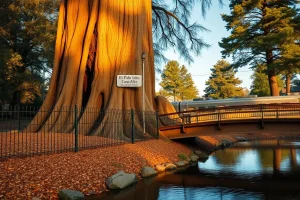
For at least 5,000 years, the area now called Palo Alto was home to the Ohlone people, specifically the Puichon tribelet of the larger Ramaytush linguistic group. They lived in small villages along the creeks and baylands, practicing a seasonal round of hunting, fishing, and gathering. The San Francisquito Creek served as a vital resource and a boundary between groups. Shell mounds, bedrock mortars, and other archaeological sites throughout the region attest to a rich, sustainable culture. The towering redwood tree later named El Palo Alto was a sacred landmark and a navigational marker for the Ohlone long before Europeans arrived.
Spanish & Mexican Era (1769–1848)
In 1769, the Portolá expedition became the first European party to traverse the peninsula, camping near El Palo Alto. Spanish missionization and disease devastated the Ohlone population. After Mexican independence in 1821, the secularization of the missions led to the distribution of vast land grants. The area of present-day Palo Alto fell within two ranchos: Rancho Rinconada del Arroyo de San Francisquito (granted to José Peña in 1835) and Rancho Cañada de Raimundo (granted to John Coppinger in 1842). These ranchos were used for cattle grazing and agriculture, with adobe structures dotting the landscape. The Mexican-American War and the Treaty of Guadalupe Hidalgo in 1848 transferred California to the United States.
Early American Settlement & the Railroad (1850s–1880s)
The Gold Rush brought a flood of settlers. In 1853, the San Francisco and San Jose Railroad was completed, with a stop at what would become Mayfield (now part of south Palo Alto). The area remained largely rural, with wheat fields, orchards, and a few estates. The iconic El Palo Alto redwood, a double-trunked giant, became a landmark for travelers. In 1863, the name “Palo Alto” (Spanish for “tall stick”) was officially used for the area around the tree. Leland Stanford, a railroad magnate and former governor, purchased a large tract in 1876, later establishing his stock farm for trotting horses.
Stanford University & the Birth of a Town (1885–1894)
The death of Leland Stanford Jr. in 1884 prompted his parents to found a university in his memory. Leland Stanford Junior University opened in 1891 on the family’s Palo Alto Farm. The arrival of the university spurred development. In 1894, the town of Palo Alto was incorporated, with a population of about 1,000. The new city adopted strict prohibition laws, which influenced the neighboring town of Mayfield (known for its saloons) to resist annexation for years. University Avenue became the main commercial corridor, and the first neighborhoods took shape.
Incorporation, Annexation & Early Growth (1894–1920s)
Palo Alto grew steadily as a college town. In 1909, after years of political wrangling, Mayfield was annexed, bringing the entire area under one municipal government. The city established its first public library, parks, and utilities. The 1906 earthquake caused damage but also spurred reconstruction. The Southern Pacific Railroad’s “Peanut Special” commuter train connected Palo Alto to San Francisco. By the 1920s, the city had a population of over 10,000, with a mix of academics, farmers, and merchants.
The Electronics Revolution & Hewlett-Packard (1930s–1950s)
Palo Alto’s transformation into a technology hub began quietly. In 1909, Cyril Elwell founded the Federal Telegraph Company, an early electronics firm. But the pivotal moment came in 1939 when Bill Hewlett and Dave Packard, two Stanford engineering graduates, started Hewlett-Packard in a garage at 367 Addison Avenue. Their first product, an audio oscillator, was sold to Walt Disney Studios. This garage is now celebrated as the “Birthplace of Silicon Valley.” During World War II, Stanford and local companies engaged in defense research, laying the groundwork for postwar expansion.
Stanford Industrial Park & the Rise of Silicon Valley (1950s–1970s)
In 1951, Stanford established the Stanford Industrial Park (now Stanford Research Park) on university land, leasing space to technology firms. Varian Associates, Eastman Kodak, and Lockheed were early tenants. This model of university-industry collaboration became a blueprint for research parks worldwide. In 1956, William Shockley founded Shockley Semiconductor Laboratory in nearby Mountain View, but his “traitorous eight” left to found Fairchild Semiconductor, igniting the integrated circuit revolution. Palo Alto itself became home to venture capital firms on Sand Hill Road and a growing number of startups.
Xerox PARC & the Personal Computing Era (1970–1980s)
In 1970, Xerox opened its Palo Alto Research Center (PARC) in the Stanford Industrial Park. PARC researchers invented the graphical user interface (GUI), the mouse, Ethernet, laser printing, and object-oriented programming—technologies that would define personal computing. Although Xerox failed to commercialize many of these innovations, they were famously adopted by Apple and Microsoft. The 1970s and 1980s saw Palo Alto become a magnet for computer scientists and entrepreneurs, with companies like Apple (briefly), Sun Microsystems, and Silicon Graphics setting up nearby.
Dot-Com Boom, Bust & the Modern Tech Landscape (1990s–Present)
The 1990s brought the internet revolution. Palo Alto’s downtown and California Avenue buzzed with startups. The dot-com crash of 2000–2001 hit hard, but the city rebounded with the rise of social media, mobile, and cloud computing. Companies like Facebook (founded in a Palo Alto house in 2004), Palantir, and Tesla (early offices) continued the tradition of garage-to-global stories. Today, Palo Alto faces challenges of housing affordability, traffic, and preserving its historic character amid relentless growth. The city’s historic preservation ordinance, adopted in 1977, protects landmarks like the HP Garage, the Ramona Street Architectural District, and the El Palo Alto tree.
Benefits
Understanding the timeline of Palo Alto history offers numerous benefits. For residents, it fosters a sense of place and community identity. For city planners and policymakers, historical context informs decisions about zoning, preservation, and development. Educators can use the timeline to teach broader themes of American history, indigenous studies, and technological innovation. Tourists and visitors gain a richer appreciation of the city’s landmarks, from the El Palo Alto tree to the Stanford campus. Businesses and entrepreneurs can draw inspiration from the garage-startup legacy. Finally, preserving and sharing this history ensures that underrepresented voices—such as the Ohlone people and early immigrant communities—are not forgotten.
Challenges
Preserving and interpreting Palo Alto’s history is not without challenges. Rapid development pressures threaten historic buildings and landscapes. The high cost of real estate makes it difficult to maintain museums and archives. Gentrification has displaced long-time residents and altered neighborhood character. There is also the ongoing need to document and honor the full spectrum of the city’s past, including the experiences of indigenous peoples, Mexican rancho families, Asian immigrants, and African American communities who contributed to the area’s growth. Balancing the narrative of technological triumph with the social and environmental costs of that growth remains a critical task for historians and civic leaders.
Best Practices
To make the most of Palo Alto’s historical timeline, consider these best practices:
- Use primary sources: Visit the Palo Alto Historical Association archives or Stanford University’s special collections to view original documents, photographs, and maps.
- Take a walking tour: Self-guided or docent-led tours of historic districts like Professorville, the HP Garage, and the El Palo Alto tree bring the timeline to life.
- Integrate multiple perspectives: Seek out resources on Ohlone history, the Mayfield saloon era, and the contributions of women and minorities in tech.
- Engage with local museums: The Palo Alto Art Center, the Museum of American Heritage, and the Cantor Arts Center offer exhibits that contextualize the city’s evolution.
- Support historic preservation: Advocate for the protection of landmarks and participate in community discussions about development and heritage.
Tools & Resources
A wealth of tools and resources exists for those who wish to explore Palo Alto’s history in depth:
- Palo Alto Historical Association (PAHA): Maintains an extensive archive, publishes the “Tall Tree” newsletter, and operates a history museum.
- City of Palo Alto Historic Inventory: An online database and map of designated historic properties and districts.
- Stanford University Libraries: Digital collections including the Stanford Historical Photograph Collection and the Silicon Valley Archives.
- El Palo Alto Park: The site of the namesake redwood, with interpretive signage detailing its history.
- HP Garage: A registered California Historical Landmark, open for exterior viewing at 367 Addison Avenue.
- Palo Alto Stanford Heritage (PAST): A nonprofit offering walking tours and advocacy for historic preservation.
- Online Timelines & Maps: The “Palo Alto History” website and the “Historic Aerials” tool allow users to compare past and present landscapes.
Future Trends
Looking ahead, several trends will shape how Palo Alto’s history is preserved and experienced. Digital archives and 3D modeling will make historical sites accessible to a global audience. Augmented reality (AR) walking tours could overlay historic photographs onto current streetscapes. Community-driven history projects, using platforms like Historypin, will capture diverse personal stories. Climate change poses a threat to historic resources, from the El Palo Alto tree (which has lost one of its twin trunks) to baylands archaeological sites. The city’s ongoing update to its historic preservation ordinance will likely address equity and sustainability. Finally, as Palo Alto continues to evolve as a tech capital, the tension between innovation and heritage will remain a defining theme.
Conclusion
The timeline of Palo Alto history is a microcosm of California’s broader story—indigenous displacement, colonial ambition, agricultural promise, educational vision, and technological revolution. From the Ohlone villages along San Francisquito Creek to the garages that launched global corporations, each era has left an indelible mark. By studying this timeline, we not only honor the past but also gain perspective on the forces that will shape the city’s future. Whether you walk beneath the ancient redwood, tour the HP Garage, or explore the Stanford campus, you are stepping into a living timeline that continues to unfold.
FAQ
What is the origin of the name 'Palo Alto'?
The name means 'tall stick' in Spanish, referring to the iconic coast redwood tree El Palo Alto that served as a landmark for early travelers and was sacred to the Ohlone people.
Who were the first inhabitants of Palo Alto?
The Ohlone people, specifically the Puichon tribelet of the Ramaytush linguistic group, lived in the area for at least 5,000 years before European contact.
When was Stanford University founded?
Leland Stanford Junior University opened in 1891, founded by Leland and Jane Stanford in memory of their son.
What is the significance of the HP Garage?
The garage at 367 Addison Avenue is where Bill Hewlett and Dave Packard started Hewlett-Packard in 1939, widely considered the 'Birthplace of Silicon Valley.'
What did Xerox PARC invent?
Xerox's Palo Alto Research Center (PARC) invented the graphical user interface (GUI), the computer mouse, Ethernet, laser printing, and object-oriented programming, laying the foundation for personal computing.
How did Palo Alto become part of Silicon Valley?
The combination of Stanford University's research, the establishment of Stanford Industrial Park in 1951, early electronics firms like Federal Telegraph and Hewlett-Packard, and the venture capital ecosystem on Sand Hill Road transformed the area into a global technology hub.

Leave a Reply