Short Answer
Location
Address and Setting
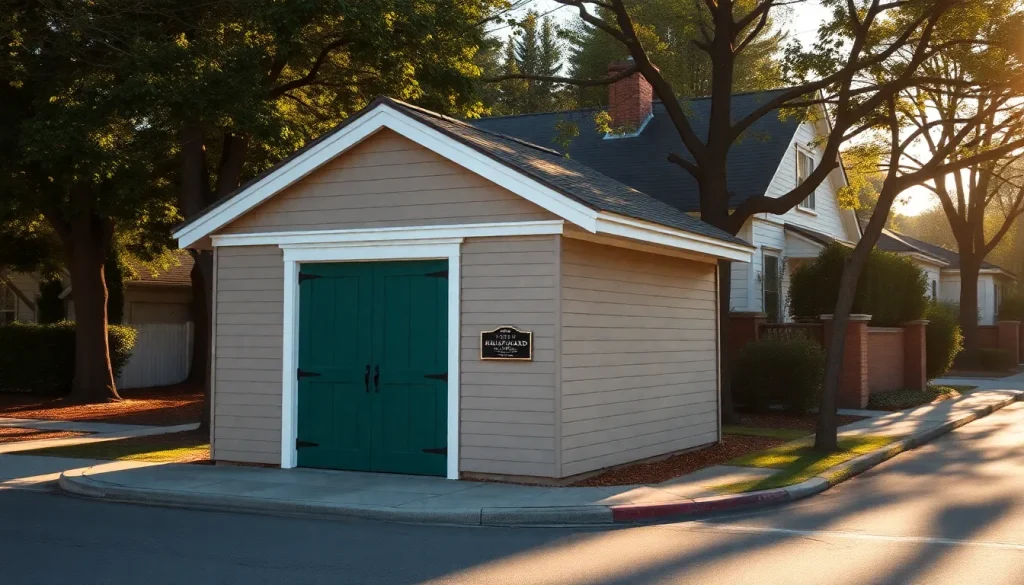
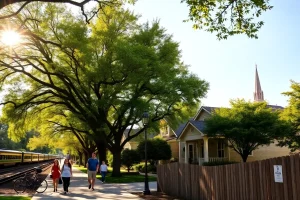
The Hewlett-Packard Garage is located at 367 Addison Avenue, Palo Alto, California 94301, in the heart of the residential Professorville neighborhood. This quiet, tree-lined street of early 20th-century homes sits just a few blocks from the bustling commercial corridors of University Avenue and within walking distance of the Stanford University campus. The property consists of a modest one-story Craftsman-style house, a detached one-car garage at the rear, and a small garden shed. The garage itself, measuring a mere 12 by 18 feet (3.7 by 5.5 meters), is tucked behind the main residence and is visible from the public sidewalk along Addison Avenue.
Geographic Context
Palo Alto lies in the southern San Francisco Bay Area, approximately 35 miles south of San Francisco and 15 miles north of San Jose. The city is bounded by the San Francisco Bay to the east and the Santa Cruz Mountains to the west. The garage’s location in Professorville—so named for the many Stanford faculty who settled there in the early 1900s—places it at the intellectual and geographic nexus of what would later be called Silicon Valley. The proximity to Stanford University, a mere 0.8 miles away, was instrumental in the founding of Hewlett-Packard, as both founders were recent Stanford electrical engineering graduates who maintained close ties with their mentor, Professor Frederick Terman.
Why It Is Significant
The Birthplace of Silicon Valley
The HP Garage is universally recognized as the birthplace of Silicon Valley, the world’s preeminent hub of technological innovation. It was within this unassuming space that William Hewlett and David Packard, with an initial investment of $538, formally established their partnership on January 1, 1939. The company they created, Hewlett-Packard, would grow to become one of the largest and most influential technology corporations in history, pioneering products from audio oscillators to pocket calculators, laser printers, and personal computers. The garage represents the physical and symbolic origin point of the entrepreneurial ecosystem that now defines the region, spawning countless startups and attracting global talent.
A Symbol of Entrepreneurial Spirit
Beyond its corporate legacy, the garage embodies the archetypal “garage startup” mythos that permeates American business culture. The story of two friends tinkering with electronics in a rented garage, bootstrapping their way to success, has inspired generations of entrepreneurs. Companies such as Apple, Google, and Amazon have their own garage or dorm-room founding legends, but the HP Garage is the original template—a tangible monument to the idea that world-changing innovation can emerge from the humblest of beginnings. It underscores the values of ingenuity, frugality, and collaboration that remain central to Silicon Valley’s identity.
Historical Designations
The site’s significance has been formally recognized through multiple designations. In 1989, it was registered as California Historical Landmark #976, with a bronze plaque affixed to the front of the house reading “Birthplace of Silicon Valley.” In 2007, the property was listed on the National Register of Historic Places for its national importance in the history of commerce and technology. These honors ensure that the garage is protected and acknowledged as a site of exceptional historical value, not merely a local curiosity.
Historical Timeline
| Date | Event |
|---|---|
| 1905 | The main house at 367 Addison Avenue is constructed in the Craftsman style. |
| 1938 | David Packard and his wife Lucile rent the first floor of the house; Bill Hewlett moves into the backyard shed. |
| January 1, 1939 | Hewlett and Packard formalize their partnership with a coin toss deciding the company name. HP is born. |
| 1939 | The first product, the HP Model 200A audio oscillator, is developed and sold to Walt Disney Studios for Fantasia. |
| 1940 | HP moves out of the garage to a rented building on Page Mill Road, Palo Alto. |
| 1989 | The site is designated California Historical Landmark #976. |
| 2000 | Hewlett-Packard Company purchases the property to preserve it as a historic site. |
| 2004–2005 | Extensive restoration returns the house and garage to their 1939 appearance. |
| 2007 | The property is listed on the National Register of Historic Places. |
| 2015 | HP Inc. assumes stewardship following the company’s split into two entities. |
Architectural or Natural Characteristics
The Garage Structure
The garage is a single-story, wood-frame, detached structure with a gabled roof covered in composition shingles. Its exterior is clad in horizontal wood siding painted a soft cream, while the double doors—the most iconic feature—are painted a distinctive dark green with white trim. The doors are of the side-hinged, swing-out variety, typical of early 20th-century garages. A small, multi-paned window on the side elevation provides natural light. Inside, the space is unadorned: exposed studs, a concrete floor, and a single workbench area. During the restoration, great care was taken to match original paint colors, hardware, and materials based on photographs and physical evidence from 1939.
The House and Property
The main residence is a Craftsman-style bungalow built in 1905, characterized by its low-pitched roof, wide overhanging eaves with exposed rafter tails, and a front porch supported by tapered square columns. The house is clad in wood shingles and painted in earthy tones. A small garden shed in the backyard, where Bill Hewlett lived during the startup phase, also survives. The entire property occupies a standard residential lot of approximately 6,000 square feet, with a driveway leading to the garage at the rear. The landscaping is simple and period-appropriate, featuring a lawn, mature trees, and foundation shrubs that frame the house without obscuring the view from the street.
Cultural Meaning
Mythology of the Garage Startup
The HP Garage has become the ur-myth of Silicon Valley, a secular shrine where the narrative of the lone inventor or small team changing the world from a suburban garage is ritually retold. This mythology, while romanticized, captures a genuine cultural value: the belief that merit, creativity, and hard work can overcome institutional barriers. The garage is a physical counterpoint to the sleek corporate campuses that now dominate the valley, reminding visitors that today’s tech giants once operated on a shoestring budget. It is frequently referenced in business literature, documentaries, and motivational speeches as proof that modest origins are no obstacle to monumental achievement.
Pilgrimage and Tourism
Despite being a private residence, the garage attracts a steady stream of tech pilgrims—entrepreneurs, engineers, students, and tourists—who come to photograph the iconic green doors and reflect on the site’s legacy. It is a mandatory stop on Silicon Valley tech tours and is often included in walking tours of historic Palo Alto. The act of visiting has become a ritual of aspiration, with many leaving notes, coins, or small tokens of homage, though such practices are discouraged to respect the privacy of the residents. The garage’s image is reproduced on countless souvenirs, articles, and corporate presentations, cementing its status as a global icon of innovation.
Influence on Silicon Valley Culture
The values associated with the garage—frugality, collaboration, and a bias toward action—have been codified into the “HP Way,” a management philosophy that emphasized employee empowerment, open communication, and innovation. This ethos influenced not only HP’s corporate culture but also the broader Silicon Valley ecosystem. The garage’s legacy is evident in the region’s tolerance for risk-taking, its flat organizational structures, and its celebration of the founder’s story. It serves as a constant reminder that the valley’s wealth was built not on resources or geography alone, but on a particular mindset that the garage so perfectly encapsulates.
Visiting Information
Viewing the Landmark
The HP Garage is a private residence and is not open to the public. Visitors are welcome to view and photograph the exterior from the public sidewalk on Addison Avenue. The garage is set back from the street, but the iconic green doors are clearly visible. A bronze California Historical Landmark plaque is mounted on a low stone pedestal near the sidewalk, providing historical context. It is essential to respect the privacy of the current occupants: do not enter the property, knock on the door, or peer into windows. The best views are obtained from the sidewalk directly in front of the house or from across the street.
Guided Tours and Events
No regularly scheduled public tours are offered. However, HP Inc. occasionally hosts private commemorative events and open houses, typically on significant anniversaries. These are by invitation only. Several commercial tour operators in Silicon Valley include the garage as a drive-by or walk-by stop on their itineraries. The Palo Alto Stanford Heritage (PAST) organization sometimes includes the garage in its walking tours of Professorville. Check local event listings for rare public access opportunities.
Best Times to Visit
The garage can be viewed year-round during daylight hours. Weekday mornings are generally quieter, offering unobstructed views and easier parking. The site is particularly photogenic in the late afternoon when the setting sun illuminates the front of the garage. Avoid visiting during school drop-off and pick-up times, as the neighborhood can become congested. There are no facilities, restrooms, or visitor services on site.
Accessibility
Physical Accessibility
The public sidewalk along Addison Avenue is flat, paved, and wheelchair accessible. The historical plaque is positioned at ground level and can be read from the sidewalk. There are no steps or barriers to viewing the garage from the public right-of-way. However, the property itself is not accessible, and there are no ramps or accessible entrances for visitors, as interior access is not permitted. Street parking is generally available but may require navigating uneven curbs.
Transportation Options
The garage is easily reached by multiple modes of transport. By car, it is a short drive from U.S. Route 101; limited free street parking is available on Addison Avenue and adjacent streets. The Palo Alto Caltrain station is approximately 1.2 miles away, a 25-minute walk or a short ride via local bus or ride-share. The free Stanford Marguerite Shuttle has stops near the Stanford campus, about a 15-minute walk from the site. Cycling is popular in Palo Alto, and bike racks are not available on site but can be found in nearby commercial areas.
Preservation Status
Restoration Efforts
In 2000, the Hewlett-Packard Company purchased the property for $1.7 million to save it from potential redevelopment. A meticulous, multi-year restoration project was undertaken to return the house, garage, and shed to their exact 1939 appearance. This involved extensive historical research, including analysis of original photographs, interviews with surviving family members, and physical investigation of paint layers and building materials. The garage’s green doors were carefully color-matched, the workbench was reconstructed, and period-appropriate landscaping was installed. The restoration was completed in 2005 and has been widely praised for its historical fidelity.
Current Ownership and Maintenance
The property is currently owned and maintained by HP Inc., the hardware and personal computing company that resulted from the 2015 split of the original Hewlett-Packard Company. HP Inc. uses the house for corporate meetings and special events, while the garage is preserved as a historic artifact. A full-time caretaker resides on the property to ensure its upkeep and security. The company has committed to maintaining the site in perpetuity as a monument to the founders’ legacy and as an inspiration for future innovators.
Common Misconceptions
It’s a Museum
Many visitors mistakenly believe the HP Garage is a public museum with exhibits and guided tours. In reality, it is a private residence and corporate meeting space. There is no visitor center, gift shop, or interpretive signage beyond the state landmark plaque. The interior is not accessible, and the garage does not contain original equipment or artifacts on display. The experience is limited to an exterior view from the sidewalk.
HP Started in a Garage Alone
While the garage is the iconic symbol, the early HP operation actually spilled over into the house and backyard shed. The kitchen was used for assembly and testing, and Bill Hewlett lived in the shed. The garage was primarily the workshop and storage area. The company’s first large order—eight audio oscillators for Walt Disney Studios—was fulfilled using the entire property, not just the garage. The myth of the solitary garage startup simplifies a more complex, distributed beginning.
The Garage Was the Only Workspace
Another common misconception is that Hewlett and Packard worked exclusively in the garage. In fact, they soon rented additional space, and by 1940, the company had moved to a commercial building on Page Mill Road. The garage served as HP’s headquarters for less than two years. Its significance lies not in the duration of its use but in its role as the crucible where the partnership was forged and the first product was created.
Map
FAQ
Can I go inside the HP Garage?
No, the garage is located on private property and is not open to the public. Visitors can view the exterior from the sidewalk.
Why is the HP Garage considered the birthplace of Silicon Valley?
It was here in 1939 that Bill Hewlett and David Packard founded Hewlett-Packard and developed their first product, the audio oscillator, launching the region’s technology industry.
Is the garage the original structure?
Yes, the garage is original to the 1905 house, but it underwent a meticulous restoration in the early 2000s to return it to its 1939 appearance.
Are there any tours available?
No regular public tours are offered, but HP occasionally hosts private events and commemorations. Walking tours of Palo Alto’s tech landmarks often include a stop at the garage.
What was the first product made in the garage?
The HP Model 200A audio oscillator, which Walt Disney Studios purchased to test sound equipment for the film Fantasia.

Leave a Reply