Short Answer
Where is Downtown North?
Downtown North is a residential neighborhood in Palo Alto, California, situated immediately north of the city’s central business district. It serves as a quiet, leafy counterpoint to the bustling University Avenue corridor, offering residents a rare combination of historic charm and urban accessibility. The neighborhood is part of the larger Palo Alto area and is often considered one of the city’s most desirable places to live due to its proximity to transit, shops, and top-rated schools.
Boundaries and map
The neighborhood’s boundaries are well-defined by major thoroughfares and natural features. University Avenue forms the southern edge, separating it from the commercial downtown. Alma Street and the Caltrain tracks mark the western limit, while Palo Alto Avenue (which becomes Embarcadero Road further east) defines the northern border. Middlefield Road is the eastern boundary, beyond which lie the neighborhoods of Old Palo Alto and Crescent Park. This compact area covers approximately 0.4 square miles, making it one of the city’s smaller but most densely developed historic districts.
| Neighborhood | Distance from Downtown North | Key Characteristics |
|---|---|---|
| Professorville | Within Downtown North | Historic district with large Craftsman and Colonial Revival homes, many built for Stanford faculty |
| Old Palo Alto | 0.5 miles east | Expansive lots, pre-1940s architecture, quiet streets |
| Crescent Park | 0.8 miles northeast | Estate-sized properties, lush landscaping, exclusive feel |
| Downtown Commercial District | Adjacent south | Shops, restaurants, theaters, and the Caltrain station |
Character of the neighborhood
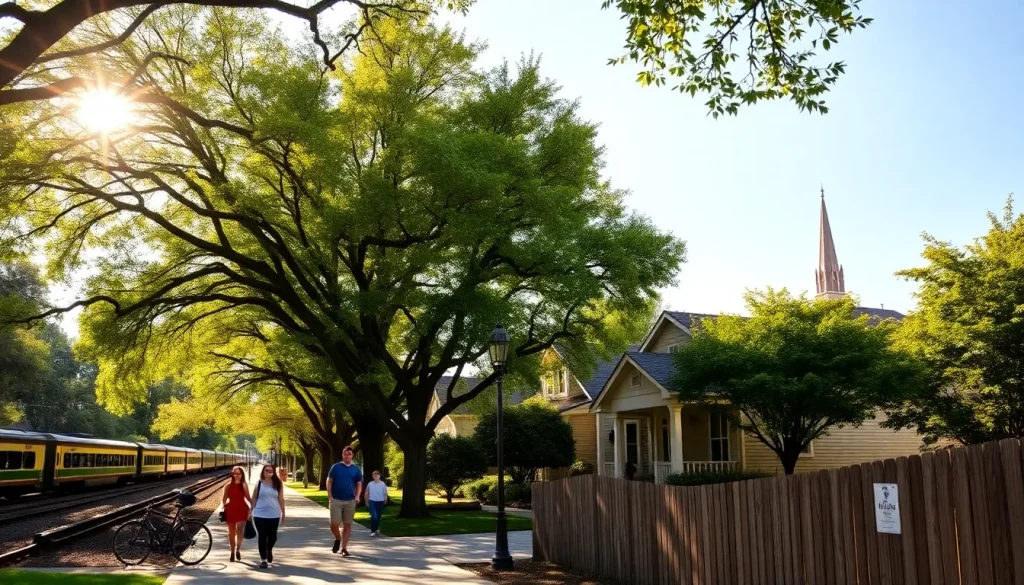
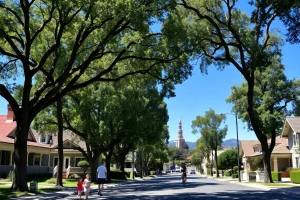
Downtown North exudes a serene, village-like atmosphere despite its central location. Streets are lined with mature camphor, magnolia, and liquidambar trees, many protected by Palo Alto’s stringent tree ordinance. Sidewalks are wide and well-maintained, encouraging walking and neighborly interaction. The architectural fabric is predominantly single-family homes from the early 1900s, interspersed with a few small apartment buildings and condominiums. The neighborhood is known for its strong sense of community, active neighborhood association, and a palpable pride in its historical legacy.
“Living in Downtown North feels like stepping back in time, yet you can walk to a world-class restaurant in five minutes. It’s the best of both worlds.” — A long-time resident and member of the Downtown North Neighborhood Association
History
The area now known as Downtown North was originally part of the Rancho Rincon de San Francisquito land grant. After Leland Stanford established his university in 1885, the town of Palo Alto began to take shape. The neighborhood’s development accelerated after the 1906 San Francisco earthquake, when displaced families sought new homes on the Peninsula. Many of the streets were platted in the 1890s and early 1900s, and the neighborhood quickly became a favored address for Stanford professors, giving rise to the Professorville sub-district. The arrival of the Southern Pacific Railroad (now Caltrain) along Alma Street cemented the area’s connectivity. By the 1920s, Downtown North was fully established, with a mix of architectural styles reflecting the era’s optimism.
Professorville Historic District
Listed on the National Register of Historic Places, Professorville encompasses a significant portion of Downtown North. It is bounded roughly by Embarcadero Road, Addison Avenue, and the alleys between Cowper and Waverley streets. The district contains one of the finest collections of Craftsman, Shingle, and Colonial Revival homes on the West Coast, many designed by noted architects such as Arthur B. Clark and Birge Clark. The area earned its name because numerous Stanford faculty members built homes here, including professors of engineering, law, and the sciences.
Housing and architecture
Housing in Downtown North is predominantly single-family detached homes, with a smaller inventory of duplexes, triplexes, and low-rise condominiums. The median home price consistently ranks among the highest in Palo Alto, reflecting the neighborhood’s desirability and limited supply. Architectural styles include:
- Craftsman Bungalows: Low-pitched roofs, wide front porches, exposed rafter tails, and extensive use of natural wood.
- Colonial Revival: Symmetrical facades, gabled roofs, and classical detailing, often in clapboard or shingle.
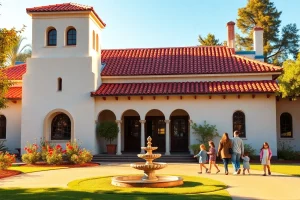
- Spanish Eclectic: Stucco exteriors, red tile roofs, and arched doorways, popular in the 1920s and 1930s.
- Mid-Century Modern: A few post-war infill homes with clean lines, large windows, and open floor plans.
Many homes have been sensitively updated, but the neighborhood’s historic character is fiercely protected by local preservation ordinances. Accessory dwelling units (ADUs) are increasingly common, providing additional housing options while maintaining the streetscape’s scale.
Parks and natural features
Despite its urban setting, Downtown North offers several green spaces for recreation and relaxation.
- Johnson Park: Located at the corner of Everett Avenue and Waverley Street, this 1.5-acre park features a children’s playground, picnic tables, a large grassy field, and a community garden. It is a hub for neighborhood gatherings and summer concerts.
- Heritage Park: A smaller, linear park along the Caltrain tracks, designed with native plantings and a walking path. It serves as a buffer between the railroad and homes.
- Scott Street Park: A pocket park at Scott Street and Addison Avenue, offering benches and a quiet retreat under mature oaks.
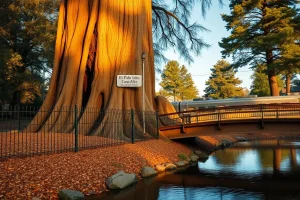
The neighborhood’s tree canopy is one of its defining natural features. The City of Palo Alto’s Urban Forestry program actively manages and protects heritage trees, which include coast live oaks, redwoods, and camphor trees that are over a century old.
Schools and community facilities
Downtown North is served by the highly acclaimed Palo Alto Unified School District. The neighborhood’s assigned schools are:
- Addison Elementary School: A California Distinguished School located on Addison Avenue, within walking distance for most residents. It offers a strong academic program and a vibrant parent community.
- Frank S. Greene Jr. Middle School: Situated on Middlefield Road, Greene is known for its innovative STEM curriculum and diverse extracurricular activities.
- Palo Alto High School: Just across Embarcadero Road, “Paly” is one of the top public high schools in the state, with a rich tradition in academics, athletics, and the arts.
Community facilities include the Downtown North Neighborhood Association, which hosts regular meetings and social events, and the Palo Alto Art Center, located just south of the neighborhood boundary. The Rinconada Library, a short walk away, offers extensive programming for all ages.
Transportation and walkability
Downtown North is one of Palo Alto’s most walkable neighborhoods. With a Walk Score typically in the high 80s, daily errands can be accomplished on foot. The neighborhood’s flat terrain and grid street pattern make cycling a popular mode of transport, with dedicated bike lanes on Bryant Street and Lytton Avenue. The Palo Alto Caltrain station is a 5- to 10-minute walk from most homes, providing direct rail service to San Francisco and San Jose. VTA bus lines run along University Avenue and Middlefield Road, connecting to Stanford University and surrounding communities. For drivers, access to Highway 101 and Interstate 280 is convenient via Embarcadero Road and Oregon Expressway.
Shops and everyday services
While Downtown North itself is primarily residential, its southern edge blends seamlessly into the University Avenue commercial district. Within a few blocks, residents have access to:
- Grocery stores: Whole Foods Market on Emerson Street, Trader Joe’s on University Avenue, and the Palo Alto Farmers’ Market (seasonal, on California Avenue).
- Dining: A diverse array of restaurants, from casual cafes to fine dining establishments like Evvia and Bird Dog.
- Boutiques and services: Independent bookstores, clothing shops, salons, and fitness studios line University Avenue and its side streets.
- Healthcare: Palo Alto Medical Foundation and Stanford Health Care facilities are within a short drive or bike ride.
Notable landmarks
Several landmarks anchor the neighborhood’s identity:
- The Stanford Theatre: A restored 1925 movie palace on University Avenue, showing classic Hollywood films and featuring a Wurlitzer organ.
- The Norris House (1913): A striking Craftsman at 1247 Cowper Street, designed by Arthur B. Clark, exemplifying the Professorville aesthetic.
- The Dunker House (1926): A Spanish Colonial Revival gem at 420 Lincoln Avenue, listed on the Palo Alto Historic Inventory.
- Palo Alto Art Center: A community arts hub with galleries, studios, and public programs, located just south of the neighborhood in Rinconada Park.
Current planning issues
Like many desirable Palo Alto neighborhoods, Downtown North faces ongoing planning debates. Key issues include:
- Historic preservation vs. development pressure: Balancing the protection of historic resources with the demand for larger, modern homes and increased density.
- ADU regulations: The city’s encouragement of accessory dwelling units has sparked discussions about parking, privacy, and neighborhood character.
- Traffic calming: Residents advocate for measures to reduce cut-through traffic on streets like Everett and Lytton avenues, especially during peak commute hours.
- Rail corridor improvements: The planned grade separation of the Caltrain tracks at Churchill Avenue and other crossings will impact the neighborhood’s western edge, with ongoing community input on design and noise mitigation.
What residents should know
Living in Downtown North comes with a few practical considerations. Street parking is regulated by a residential permit program to manage spillover from downtown visitors. The neighborhood is within the Palo Alto Airport noise corridor, though flight paths are limited. The active neighborhood association is a valuable resource for newcomers, offering welcome packets and social events. Finally, the area’s mature trees, while beautiful, require regular maintenance and can impact sidewalks and foundations; the city’s arborist office provides guidance on protected species.
Nearby neighborhoods
Downtown North is surrounded by equally distinctive areas, each with its own character. To the south, the Downtown Commercial District offers urban energy. To the east, Old Palo Alto and Crescent Park feature larger lots and a more suburban feel. To the north, across Palo Alto Avenue, lies the Community Center neighborhood with its mid-century homes and proximity to the Palo Alto Art Center and Rinconada Park. To the west, across the tracks, is the Ventura neighborhood, which shares a similar historic fabric but with a slightly more eclectic mix of housing.
FAQ
What is the parking situation in Downtown North?
Street parking is regulated by a residential permit program to prevent overflow from downtown visitors. Residents can purchase annual permits, and there are time-limited spaces for guests. Some homes have driveways or garages, but many older properties rely on street parking. The neighborhood's walkability and proximity to transit reduce car dependency for many households.
Is Downtown North a good neighborhood for families?
Yes, it is highly sought-after by families. The neighborhood is served by top-rated Palo Alto schools, including Addison Elementary, which is within walking distance. Johnson Park offers a playground and open space, and the quiet, tree-lined streets are safe for children. The active neighborhood association organizes family-friendly events, and the proximity to libraries and the art center adds to its appeal.
How close is Downtown North to public transit?
The Palo Alto Caltrain station is a 5- to 10-minute walk from most parts of the neighborhood, providing frequent service to San Francisco, San Jose, and the Peninsula. VTA bus routes 22 and 522 run along University Avenue, connecting to Stanford University and East Palo Alto. The flat terrain and bike lanes also make cycling a popular option for commuting.
What are the main architectural styles in Downtown North?
The neighborhood is known for its early 20th-century homes, with Craftsman Bungalows and Colonial Revival styles predominating. You'll also find Spanish Eclectic homes from the 1920s and a few Mid-Century Modern infill houses. The Professorville Historic District contains some of the finest examples of these styles, many designed by prominent local architects.
Leave a Reply