Short Answer
Quick Answer
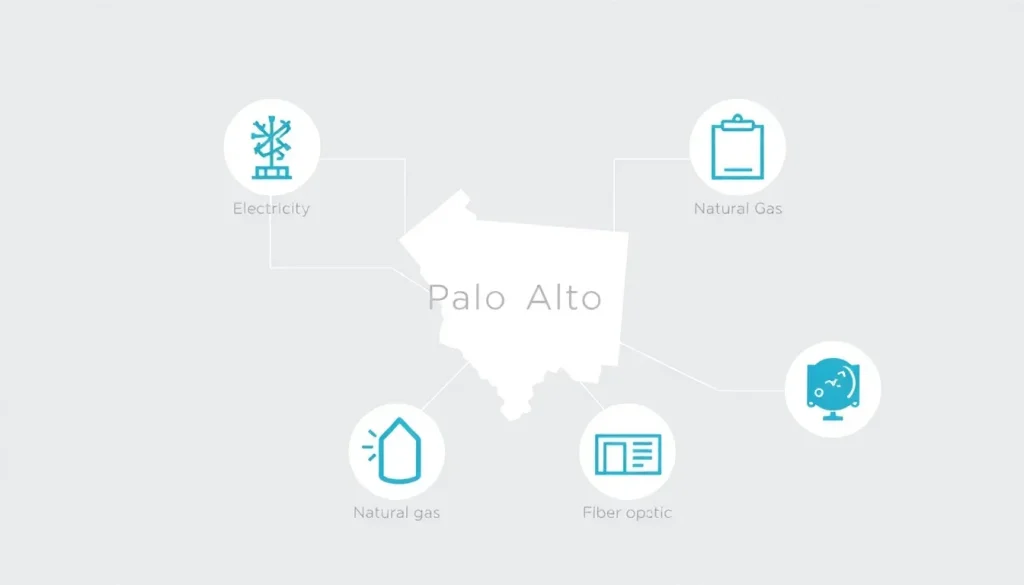
Palo Alto Utilities (CPAU) is a city-owned utility providing electricity, water, gas, and fiber optic services to residents and businesses within Palo Alto. Unlike most cities that rely on private companies, Palo Alto has operated its own utilities since 1900 to ensure local control, competitive rates, and high reliability. Today, CPAU serves approximately 30,000 customers and is a national leader in carbon-neutral electricity.
What Is Palo Alto Utilities: Why the City Operates Its Own Services?
Palo Alto Utilities is a municipally owned utility, meaning the city government directly owns and operates the infrastructure for delivering essential services. This model dates back to 1900, when Palo Alto established its own water system to support a growing population and to maintain local control over rates and service quality. Over the decades, the city added electric (1900), gas (1917), and later fiber optic (1996) services. Today, CPAU is one of the few city-owned utilities in California that provides all four services.
The decision to remain a municipal utility is rooted in several core principles: local accountability, competitive rates, reliability, and sustainability. Because CPAU is not a for-profit entity, revenues are reinvested into infrastructure, renewable energy projects, and customer programs. The city’s elected officials and appointed Utility Advisory Commission provide direct oversight, ensuring that decisions reflect community values. This structure has allowed Palo Alto to achieve a 100% carbon-neutral electric supply and to offer some of the lowest combined utility rates in the region.
Who Manages It?
The City of Palo Alto Utilities (CPAU) is a department of the City of Palo Alto, operating under the authority of the City Council and the City Manager. The Utility Director oversees day-to-day operations, with support from divisions dedicated to electric, water, gas, and fiber optic services. The Utility Advisory Commission, composed of community members appointed by the City Council, provides recommendations on rates, policies, and long-term planning. While CPAU is a municipal utility, it must still comply with state and federal regulations for water quality, gas pipeline safety, and environmental standards. However, unlike investor-owned utilities, CPAU’s rates are set locally by the City Council, not by the California Public Utilities Commission.
Current Status
As of 2025, CPAU continues to operate all four utility systems with a strong focus on reliability, sustainability, and affordability. The electric utility serves approximately 30,000 customers and has maintained a 100% carbon-neutral power supply since 2013, achieved through a mix of renewable energy contracts, hydroelectric resources, and carbon offsets. The water system provides high-quality drinking water from Hetch Hetchy Reservoir and local groundwater sources, serving about 25,000 accounts. The natural gas system is one of the few municipally owned gas utilities in the state, with ongoing investments in leak detection and pipeline safety. The fiber optic network, known as Palo Alto Fiber, has expanded to cover most of the city and offers gigabit-speed internet to residents and businesses.
Recent developments: In 2023, the City Council approved a multi-year rate adjustment to fund infrastructure upgrades, including water main replacements and electric grid modernization. The fiber network continues to expand into underserved neighborhoods, with a goal of citywide coverage. CPAU also launched new customer programs, such as enhanced energy efficiency rebates and a time-of-use electric rate pilot.
How Residents Use It
Residents and businesses can start, stop, or modify utility services through a straightforward process managed by the City of Palo Alto Utilities Customer Service Center.
- Establish service: New residents should contact the CPAU Customer Service Center at least three business days before their move-in date. Provide the service address, move-in date, and personal identification. A deposit may be required for renters or customers with limited credit history.
- Choose services: Most residential customers receive electric, water, and gas services. Fiber optic internet is optional and requires a separate installation appointment. Customers can also enroll in paperless billing, automatic payments, and budget billing plans.
- Manage your account: Once service is active, customers can monitor usage, pay bills, and report outages through the online customer portal or the CPAU mobile app. Outage reporting is available 24/7, and the city provides real-time outage maps for electric and fiber services.
Relevant Map or Dataset
The City of Palo Alto’s Open Data Platform provides a dataset titled “Utility Service Areas” that delineates the geographic boundaries for electric, water, gas, and fiber services. This map shows the exact footprint of CPAU’s service territory, which generally aligns with the city limits but excludes some unincorporated areas. Residents can use this map to verify whether a specific address falls within the service area. The dataset is updated annually and includes attributes such as service type, substation zones, and pressure districts for water.
| Data Point | Description | Source |
|---|---|---|
| Electric Customers | Approximately 30,000 residential and commercial accounts | CPAU Annual Report 2024 |
| Water Service Area | 26 square miles, covering the entire city | City of Palo Alto Open Data |
| Carbon-Neutral Since | 2013, through renewable energy and offsets | CPAU Sustainability Report |
| Fiber Coverage | Over 90% of city premises passed | Palo Alto Fiber Status Map |
Key Terminology
- Municipal Utility: A utility owned and operated by a local government, not a private company.
- Carbon Neutral: Achieving net-zero carbon emissions by balancing emissions with offsets or renewable energy.
- Time-of-Use Rate: An electricity pricing structure where rates vary based on the time of day, encouraging off-peak usage.
- Hetch Hetchy Water System: A regional water supply system operated by San Francisco, providing high-quality Sierra Nevada water to Palo Alto and other Bay Area cities.
Limitations and Caveats
While CPAU provides reliable services, there are important limitations. The utility’s service area is strictly limited to the incorporated city limits; residents in unincorporated pockets or neighboring cities cannot receive service. The fiber network, though extensive, is not yet available to every address—some multi-dwelling units and remote streets may still be awaiting connection. Data on the open data platform may have a lag of up to six months and should not be used for real-time operational decisions. Additionally, rate structures can be complex, and customers should review the detailed rate schedules to understand their bills fully. Finally, as a municipal utility, CPAU is not regulated by the California Public Utilities Commission for rate-setting, which means residents must rely on the City Council process for rate oversight.
Update History
- 2024-10-01: New time-of-use electric rate pilot launched for residential customers.
- 2023-07-01: Multi-year rate adjustment approved, affecting all utility services.
- 2022-03-15: Fiber network expansion completed in the Midtown neighborhood.
- 2020-01-01: CPAU achieved 100% carbon-neutral electricity supply for the seventh consecutive year.
Official Sources
- City of Palo Alto Utilities: https://www.cityofpaloalto.org/Departments/Utilities
- Palo Alto Open Data Platform: https://data.cityofpaloalto.org
- CPAU Annual Report 2024: https://www.cityofpaloalto.org/files/assets/public/utilities/annual-report-2024.pdf
- Utility Advisory Commission: https://www.cityofpaloalto.org/Government/Boards-Commissions/Utility-Advisory-Commission
FAQ
Why does Palo Alto have its own utilities instead of using PG&E?
Palo Alto established its own utilities in 1900 to maintain local control over rates, reliability, and service quality. As a municipal utility, CPAU reinvests revenues into the community and is directly accountable to residents through the City Council.
How do I start utility service when moving to Palo Alto?
Contact the CPAU Customer Service Center at least three business days before your move-in date. Provide your address, move-in date, and identification. A deposit may be required for renters. You can also request fiber internet installation at the same time.
Is Palo Alto’s electricity really 100% carbon neutral?
Yes, CPAU has maintained a 100% carbon-neutral electric supply since 2013. This is achieved through a combination of renewable energy contracts, large hydroelectric resources, and verified carbon offsets for any remaining emissions.
How do Palo Alto’s utility rates compare to neighboring cities?
CPAU’s rates are generally competitive and often lower than those of investor-owned utilities in the region. Because the utility is not-for-profit, rates reflect the actual cost of service. The City Council reviews and adjusts rates through a public process.


Leave a Reply