Short Answer
Where is College Terrace?
College Terrace is a compact, leafy residential neighborhood in the southern part of Palo Alto, California. It sits directly south of the Stanford University campus and north of Page Mill Road, placing it at the intellectual and geographic heart of the mid-Peninsula. The neighborhood is entirely within the city limits of Palo Alto and is one of the city’s oldest planned subdivisions. Its name reflects the original vision of a community for Stanford faculty and staff, and that academic connection remains a defining feature today.
Boundaries and map
The neighborhood’s boundaries are clearly defined by major roads and institutional land:
- North: Stanford University lands (Stanford Avenue and the campus edge)
- East: El Camino Real (State Route 82)
- South: Page Mill Road
- West: Stanford University (the main campus, including the Stanford Golf Course and academic buildings)
College Terrace is roughly rectangular, covering about 0.2 square miles. Its location places it immediately adjacent to the California Avenue business district, which lies just south of Page Mill Road, and within a 10-minute walk of the Stanford University Main Quad. A detailed map is available on the City of Palo Alto’s neighborhood portal.
Character of the neighborhood
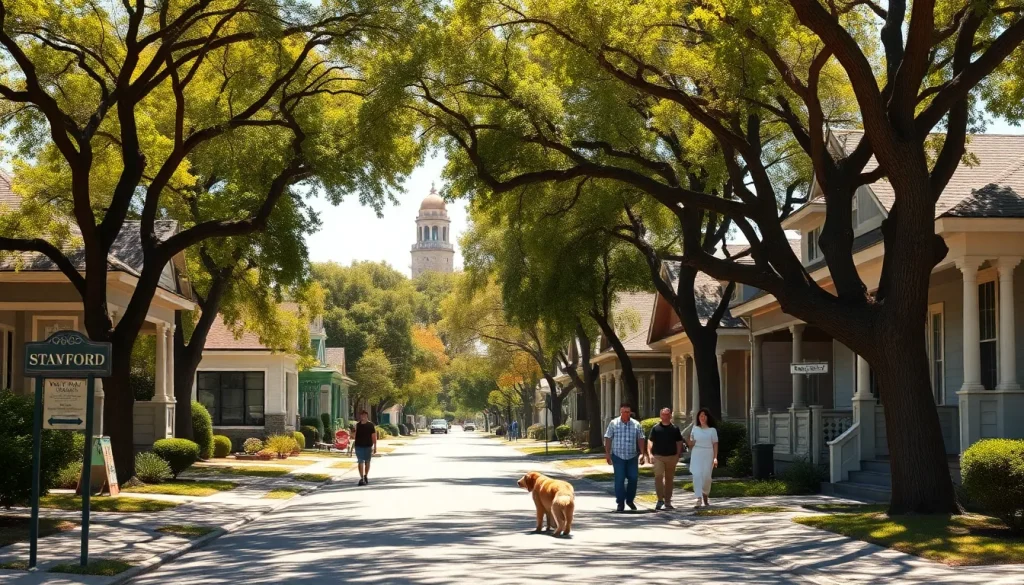
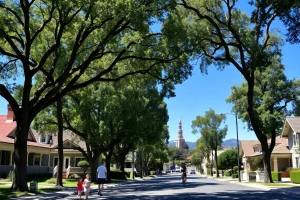
College Terrace exudes a quiet, village-like atmosphere. Streets are lined with mature camphor, oak, and liquidambar trees, and sidewalks are wide and well-maintained. The predominant architectural style is early 20th-century Craftsman bungalows and Spanish Revival homes, many with deep front porches and established gardens. There are no high-rise buildings; the tallest structures are two-story homes and the occasional three-story apartment building. The neighborhood is almost entirely residential, with a small pocket park and a branch library serving as community anchors. Residents often describe it as a “hidden gem” where neighbors know each other by name and children walk to school.
“College Terrace feels like a small town tucked inside a city. You can walk to Stanford, to the train, to the farmers’ market—it’s the best of all worlds.” — Longtime resident and CTRA board member
History
The land that became College Terrace was originally part of the Rancho San Francisquito, a Mexican land grant made to Antonio Buelna in 1839. After passing through several owners, the area was acquired by Timothy Hopkins, who had been instrumental in the founding of Palo Alto and the establishment of Stanford University. In the early 1890s, Hopkins subdivided the tract with the specific intention of creating a residential neighborhood for Stanford professors and staff. The first homes were built around 1895, and the neighborhood was officially platted as “College Terrace” in 1904.
Many of the early residents were indeed Stanford affiliates, and the neighborhood developed a reputation for intellectual and cultural activity. The College Terrace Library, a Carnegie-funded branch, opened in 1914 and remains a cherished institution. During the mid-20th century, the neighborhood saw infill development, but strict zoning and active resident advocacy preserved its low-rise character. Today, College Terrace is listed on Palo Alto’s Historic Inventory, with several individual homes recognized as historic resources.
Housing and architecture
Housing in College Terrace is dominated by single-family detached homes, with a smaller number of duplexes, triplexes, and low-rise apartment buildings. The architectural palette is remarkably cohesive, reflecting the neighborhood’s development between 1895 and 1940. Key styles include:
- Craftsman Bungalow: Low-pitched gable roofs, exposed rafters, wide front porches with tapered columns, and built-in cabinetry. Many have been sensitively updated.
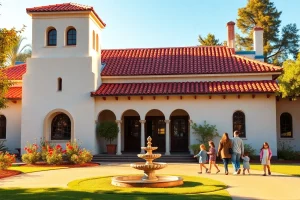
- Spanish Revival: Stucco exteriors, red tile roofs, arched doorways, and wrought-iron details, popular in the 1920s and 1930s.
- Colonial Revival: Symmetrical facades, multi-pane windows, and classical entryways, often seen in the larger homes on wider lots.
- Mid-century Ranch: A few post-war infill homes with horizontal lines and large windows, blending into the streetscape.
Lot sizes are typically 5,000 to 7,000 square feet, and homes range from 1,200 to 2,500 square feet. Due to the neighborhood’s desirability and proximity to Stanford, property values are among the highest in Palo Alto. The College Terrace Residents Association (CTRA) actively monitors teardowns and encourages preservation-sensitive remodels.
Parks and natural features
The neighborhood’s primary green space is College Terrace Park (also known as Werry Park), a 1.5-acre park at the corner of College Avenue and Princeton Street. It features a children’s playground, a grassy lawn, picnic tables, and a small basketball half-court. Mature sycamores and redwoods provide ample shade. The park hosts the annual Fourth of July parade and picnic, a beloved community tradition since the 1950s.
Just outside the neighborhood, the Stanford University campus offers hundreds of acres of open space, including the Stanford Arboretum, the Dish hiking area, and the Stanford Golf Course. The California Avenue pedestrian plaza (south of Page Mill) provides a car-free gathering space with seating and planters. No creeks run through College Terrace itself, but Matadero Creek passes to the south.
Schools and community facilities
College Terrace is served by the highly regarded Palo Alto Unified School District (PAUSD). The designated schools are:
- Escondido Elementary School (K-5) – located on Stanford land just north of the neighborhood, a short walk or bike ride away.
- Jane Lathrop Stanford Middle School (JLS) – about 1.5 miles north, accessible via bike routes.
- Palo Alto High School – approximately 2 miles north, with dedicated bike lanes along El Camino Real.
The College Terrace Library, a branch of the Palo Alto City Library, is housed in a charming 1914 building at 2300 Wellesley Street. It offers a children’s reading area, public computers, and a community room used for neighborhood meetings. The College Terrace Residents Association (CTRA) is the official neighborhood organization, hosting social events, publishing a newsletter, and representing residents in city planning matters. The Palo Alto Family YMCA on Page Mill Road is a short walk away and provides fitness facilities and youth programs.
Transportation and walkability
College Terrace is one of Palo Alto’s most walkable and bike-friendly neighborhoods. Key transportation features include:
- Walk Score: 78 (Very Walkable). Daily errands can be accomplished on foot, especially with the California Avenue district just across Page Mill Road.
- Bike Score: 92 (Biker’s Paradise). Flat terrain, dedicated bike lanes on Stanford Avenue and Page Mill Road, and proximity to the Stanford campus make cycling a primary mode of transport.
- Caltrain: The California Avenue station is a 10-minute walk south, providing frequent service to San Francisco and San Jose.
- Bus: VTA bus lines 22 and 522 run along El Camino Real, connecting to downtown Palo Alto, Stanford, and San Jose. The free Stanford Marguerite shuttle stops at the edge of the neighborhood.
- Major roads: El Camino Real and Page Mill Road provide regional access, but traffic calming measures on interior streets keep speeds low.
Shops and everyday services
While College Terrace itself is almost exclusively residential, the adjacent California Avenue Business District (just south of Page Mill Road) serves as the neighborhood’s commercial heart. Within a 5- to 10-minute walk, residents can find:
- Grocery stores: The Market at Edgewood (natural foods), Piazza’s Fine Foods (gourmet grocer), and a weekly farmers’ market on Sundays.
- Dining: A wide range of restaurants, from casual cafes like Coupa Café to upscale dining at Evvia Estiatorio.
- Services: Banks, dry cleaners, a post office, salons, and medical offices.
- Retail: Independent bookstores, boutiques, and a hardware store.
For larger shopping trips, the Stanford Shopping Center and downtown Palo Alto are a short drive or bike ride away.
Notable landmarks
- College Terrace Library (1914): A classic Carnegie library with a red-tile roof and arched windows, listed on the city’s historic inventory.
- College Terrace Park / Werry Park: The neighborhood’s central gathering space, featuring a vintage “College Terrace” sign and a community bulletin board.
- Stanford University Hoover Tower: Visible from many streets, the 285-foot tower is an iconic landmark that anchors the neighborhood’s sense of place.
- Historic homes: Several residences, such as the 1905 Craftsman at 2100 block of Princeton Street, are recognized for their architectural significance.
Current planning issues
College Terrace faces several ongoing planning discussions that reflect broader regional pressures:
- Housing density and teardowns: The replacement of modest older homes with larger two-story structures has raised concerns about preserving neighborhood character. The CTRA advocates for design guidelines that respect the existing scale and setbacks.
- Stanford University expansion: The university’s long-range development plan includes new academic buildings and housing near the neighborhood’s western edge, prompting discussions about traffic, parking, and tree preservation.
- Traffic calming on Page Mill Road: As a major arterial, Page Mill Road sees high volumes of cut-through traffic. Residents have pushed for enhanced crosswalks, bike lane improvements, and speed reduction measures.
- Accessory dwelling units (ADUs): State law changes have led to an increase in ADU applications, which the neighborhood association monitors to ensure they align with the area’s fabric.
What residents should know
Living in College Terrace comes with a few unique considerations:
- Parking permits: On-street parking is restricted in some areas to prevent Stanford commuter overflow. Residents can obtain permits through the city’s Residential Preferential Parking program.
- Leaf blower noise: The neighborhood’s dense tree canopy means frequent gardening maintenance; the city enforces noise ordinances for gas-powered leaf blowers.
- Community events: The Fourth of July parade, National Night Out block parties, and the CTRA annual meeting are key social fixtures. Joining the neighborhood email list is the best way to stay informed.
- Wildlife: Mature trees attract squirrels, raccoons, and a variety of birds. Residents are advised to secure trash bins and avoid feeding wildlife.
- Historic preservation: Homeowners considering exterior renovations should check with the city’s historic inventory to see if their property is listed, as additional review may apply.
Nearby neighborhoods
College Terrace is surrounded by distinct areas that offer different lifestyles and amenities. The table below provides a quick comparison.
| Neighborhood | Distance | Key Characteristics |
|---|---|---|
| Stanford University | Adjacent (north and west) | Academic campus, museums, open space, student housing, cultural events |
| California Avenue District | 0.2 miles south | Walkable commercial area, restaurants, farmers’ market, Caltrain station |
| Professorville | 1.5 miles north | Historic district with grand Victorian and Craftsman homes, near downtown |
| Barron Park | 1 mile southwest | Rural-suburban feel, larger lots, donkey pasture, excellent schools |
| Downtown Palo Alto | 2 miles north | Urban core, high-end retail, theaters, nightlife, transit hub |
FAQ
What is the housing market like in College Terrace?
Housing is dominated by single-family homes built between 1895 and 1940, with a median sale price typically exceeding $3 million. Inventory is low, and homes often sell quickly due to the neighborhood's proximity to Stanford and top-rated schools. Many buyers are academics, tech professionals, and families seeking a quiet, walkable community. Rentals are limited but include a few apartment buildings and accessory dwelling units.
Is College Terrace a good neighborhood for families with children?
Yes, it is considered one of the most family-friendly neighborhoods in Palo Alto. Children can walk or bike to Escondido Elementary School, the local park has a playground, and the streets are safe for play. The neighborhood association organizes events like the Fourth of July parade and Halloween gatherings. The highly rated Palo Alto Unified School District is a major draw.
How close is College Terrace to Stanford University?
The neighborhood directly borders the Stanford campus. The Main Quad is about a 10-minute walk or a 5-minute bike ride. Many residents work or study at Stanford, and the free Marguerite shuttle stops at the edge of the neighborhood. The proximity also means residents can easily access campus amenities like the Cantor Arts Center, the Dish hiking trail, and sporting events.
Are there any historic preservation rules for homeowners?
College Terrace is listed on Palo Alto's Historic Inventory, and several individual homes are designated as historic resources. While not all properties are subject to strict preservation review, any exterior alterations to listed homes may require approval from the city's Historic Resources Board. The College Terrace Residents Association encourages homeowners to consult the city's planning department before undertaking major remodels or demolitions.

Leave a Reply